
Opening a restaurant in the USA is a dream for many entrepreneurs. For some, it starts with a family recipe passed through generations. For others, it begins with the idea of creating a unique dining experience, introducing a new cuisine, or building a profitable food brand.
However, turning a restaurant idea into a successful business requires much more than preparing great food. A restaurant is a complex business that combines food, customer experience, financial management, operations, marketing, and compliance with regulations.
Many new restaurant owners focus heavily on the menu but underestimate other critical areas such as location selection, restaurant startup costs, licensing requirements, employee management, and customer acquisition. A strong concept can fail without proper planning, while a well-planned restaurant can grow into a recognizable brand.
The US restaurant industry offers significant opportunities because customers are constantly looking for new dining experiences, convenient food options, and diverse cuisines. At the same time, competition is intense, which means restaurant owners need a clear strategy before investing their time and money.
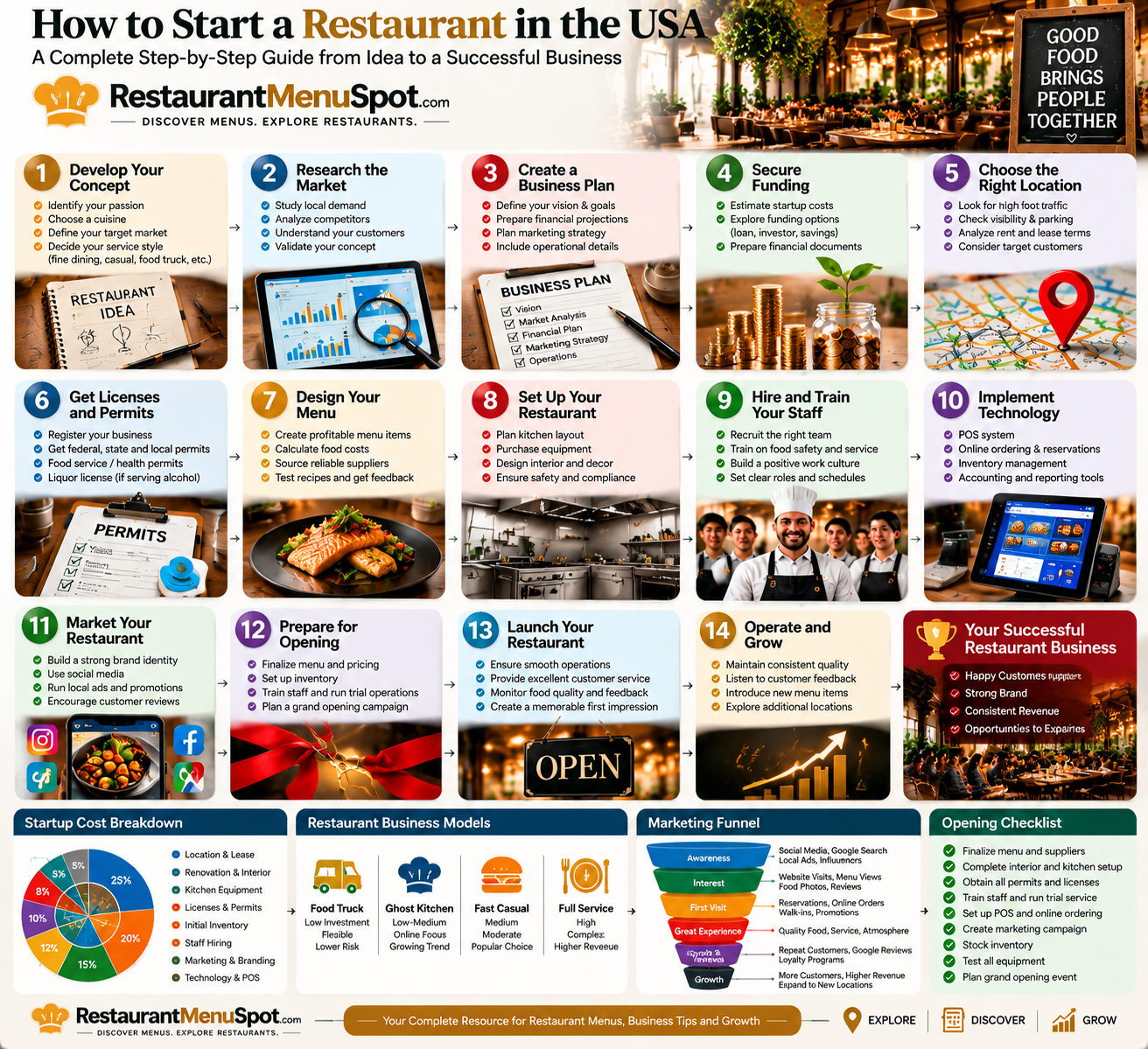
This guide explains how to start a restaurant in the USA, covering everything from choosing your restaurant concept and creating a business plan to obtaining licenses, managing costs, hiring staff, and launching your restaurant successfully.
What Does It Take to Start a Restaurant in the USA?
Starting a restaurant requires balancing creativity with business discipline. A successful restaurant owner needs to understand both the customer side and the operational side of the business.
The foundation of a successful restaurant usually includes five important elements:
1. A Clear Restaurant Concept
Your restaurant concept defines what type of experience you want to create. It includes your cuisine, service style, target customers, pricing, atmosphere, and brand identity.
For example, a quick-service burger restaurant and a premium Italian dining restaurant may both sell food, but their:
- Customers
- Investment requirements
- Staffing needs
- Menu strategies
- Marketing approaches
will be completely different.
A clear restaurant concept helps customers understand why they should choose your restaurant instead of competitors.
2. Understanding Your Target Market
Before opening a restaurant, you need to understand who your customers are and what they want.
Market research helps answer questions like:
- Who lives in your target area?
- What type of food is in demand?
- What restaurants already exist?
- What price range do customers prefer?
- Are there gaps in the local market?
For example, opening an authentic Asian restaurant in an area with growing demand but limited options may create a strong opportunity.
A restaurant should not only sell food; it should solve a customer need.
3. A Realistic Financial Plan
Many restaurants fail because owners underestimate the money required to start and operate the business.
Restaurant startup costs may include:
- Business registration
- Licenses and permits
- Location deposit
- Renovation
- Kitchen equipment
- Furniture
- Inventory
- Marketing
- Employee costs
- Insurance
A proper restaurant business plan helps estimate these expenses and prepares the owner for ongoing operational costs.
4. Efficient Restaurant Operations
A successful restaurant needs systems that maintain quality and control costs.
Important operational areas include:
- Food preparation processes
- Inventory management
- Staff training
- Customer service standards
- Food safety procedures
- Daily financial tracking
Without proper systems, even a popular restaurant can struggle with inconsistent quality and rising expenses.
5. Strong Marketing Strategy
A restaurant cannot depend only on walk-in customers. Modern restaurants need a digital presence.
Important marketing channels include:
- Restaurant website
- Google Business Profile
- Social media platforms
- Online reviews
- Local SEO
- Email marketing
- Community partnerships
Building customer awareness before opening can significantly improve the chances of a successful launch.
Why Start a Restaurant in the USA?
The United States has one of the world’s largest and most diverse food markets. Customers regularly spend on dining experiences, convenience food, delivery services, and specialty cuisines.
According to the National Restaurant Association, restaurants represent a significant part of the US economy and provide millions of jobs across the country. This creates opportunities for entrepreneurs who can identify customer needs and operate efficiently.
However, opportunity does not guarantee success. The restaurant industry is competitive, and success depends on planning, execution, and understanding the market.
Who Can Start a Restaurant in the USA?
A restaurant can be started by different types of entrepreneurs, including:
First-Time Business Owners
People with limited business experience can enter the restaurant industry by choosing a manageable concept, learning operations, and creating a strong business plan.
Experienced Food Professionals
Chefs and hospitality professionals may start restaurants based on their culinary skills and industry knowledge.
International Entrepreneurs
Many immigrants and international entrepreneurs open restaurants in the USA by introducing authentic cuisines and serving specific communities.
However, every owner must understand US business regulations, local requirements, taxation, and food safety standards.
Common Questions Before Starting a Restaurant
Many aspiring restaurant owners ask:
How much money do I need to open a restaurant in the USA?
The cost varies significantly depending on the restaurant type, location, size, and concept. A small food business may require less investment than a full-service restaurant with a large dining area.
A proper cost analysis should be completed before making financial commitments.
Can I open a restaurant without experience?
Yes, but success requires preparation. First-time owners should learn restaurant operations, work with experienced professionals, or start with a simpler business model.
Is opening a restaurant profitable?
Profitability depends on several factors:
- Location
- Food costs
- Labor management
- Pricing strategy
- Customer demand
- Operational efficiency
A profitable restaurant is usually the result of strong planning rather than luck.
What You Will Learn in This Guide
In this complete guide, you will learn:
- How to define your restaurant concept
- How to choose a cuisine type
- How to select the right service style
- How to research your local market
- How to create a restaurant business plan
- How to calculate restaurant startup costs
- How to find restaurant funding options
- How to register your restaurant business
- What licenses and permits you need
- How to design your restaurant layout
- How to create a profitable menu
- What restaurant equipment you need
- How to hire and train staff
- How to market your restaurant before opening
Starting a restaurant is a challenging journey, but with the right planning and strategy, your idea can become a successful food business. The next step is building the foundation of your restaurant:
Define Your Restaurant Concept: The First Step Before Opening Your Restaurant
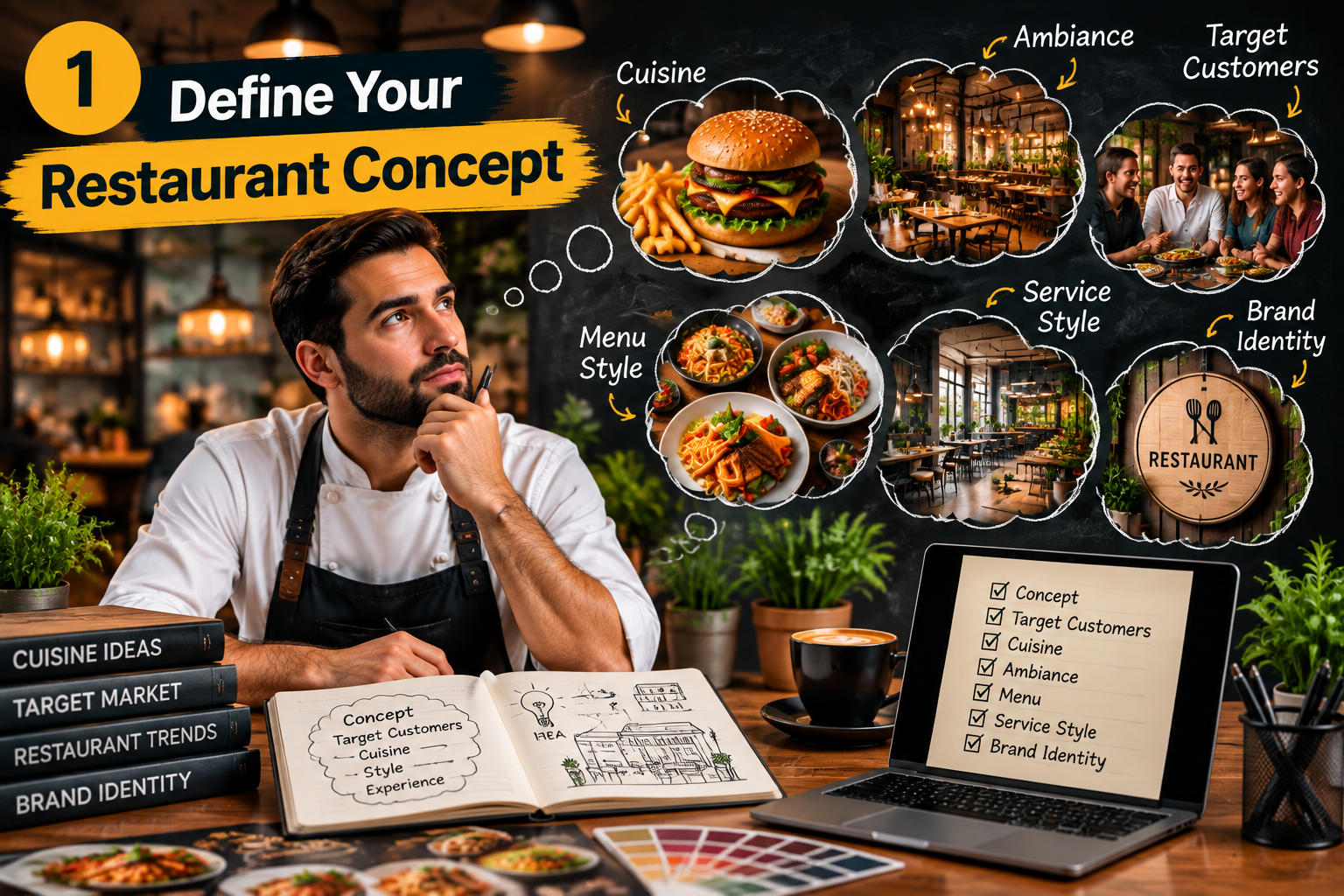
Before investing money in a restaurant, the first step is defining exactly what type of restaurant you want to create. Your restaurant concept is the foundation that influences every major decision, including your menu, location, pricing, branding, equipment, staffing, and marketing strategy.
Many first-time restaurant owners start with a food idea but do not develop a complete concept. A successful restaurant is not only about serving good food; it is about creating a clear identity that customers can understand and remember.
For example, a restaurant serving burgers near a university campus will have a completely different concept from a luxury seafood restaurant in a high-income neighborhood. Both can succeed, but they require different strategies.
A strong restaurant concept answers three important questions:
- What food will you serve?
- Who are your customers?
- Why should customers choose your restaurant?
Select a Cuisine Type for Your Restaurant
Choosing the right cuisine is one of the most important decisions when starting a restaurant in the USA. Your cuisine choice affects your target audience, menu design, ingredient costs, kitchen requirements, and overall brand positioning.
Many entrepreneurs choose a cuisine based only on personal interest. However, successful restaurant owners combine passion with market research. A cuisine should have customer demand, reliable ingredient availability, and a clear opportunity to compete.
Before selecting a cuisine type, consider:
- Local customer preferences
- Existing competition
- Ingredient availability
- Food preparation requirements
- Potential profit margins
For example, opening an authentic Indian, Pakistani, Korean, or Mexican restaurant in an area with growing interest in international food may create a strong opportunity. However, the restaurant must still offer quality, consistency, and a clear reason for customers to return.
Popular Restaurant Cuisine Categories in the USA
The United States has one of the most diverse restaurant markets in the world. Customers are interested in traditional American food as well as international cuisines. Selecting the right category depends on your target customers, location, competition, and restaurant business model.
American Cuisine
American cuisine is one of the most established restaurant categories in the USA. It includes familiar comfort foods and can be adapted into different restaurant formats, from fast-food concepts to casual dining and premium restaurants.
Examples:
- Burgers
- Sandwiches
- BBQ
- Steak
- Comfort food
Advantages:
- Large customer demand
- Familiar menu choices
- Easier customer acceptance
Challenges:
- High competition
- Requires strong differentiation
American cuisine can be a strong opportunity for new restaurant owners, but success depends on creating a unique concept, maintaining quality, and understanding local customer expectations.
Asian Cuisine
Asian cuisine has become a major part of the US restaurant industry because of its variety, cultural popularity, and ability to support different business models.
Examples:
- Chinese
- Japanese
- Thai
- Korean
- Vietnamese
Advantages:
- Wide customer interest
- Many menu possibilities
- Suitable for dine-in, takeout, and delivery models
Challenges:
- Competitive market
- Requires consistency and authentic flavors
Asian restaurants can succeed by balancing traditional recipes with customer-friendly menus and strong restaurant branding.
Mexican Cuisine
Mexican food is widely popular across the USA because it offers affordable, flavorful, and flexible menu options. It works well for fast-casual restaurants, food trucks, and full-service dining concepts.
Examples:
- Tacos
- Burritos
- Quesadillas
- Mexican bowls
- Street food
Advantages:
- Strong customer demand
- Flexible pricing options
- Works with different restaurant models
Challenges:
- Competitive category
- Requires a unique identity
A successful Mexican restaurant often focuses on authentic flavors, quality ingredients, and a memorable customer experience.
South Asian Cuisine
South Asian cuisine, including Indian, Pakistani, and Bangladeshi food, continues to attract customers across many US cities. These restaurants can serve both local communities and customers interested in exploring international cuisines.
Examples:
- Biryani
- Curry dishes
- Tandoori items
- Halal food
- Regional specialties
Advantages:
- Growing interest in international cuisines
- Strong customer loyalty potential
- Opportunities for catering and delivery
Challenges:
- Need to educate new customers
- Maintaining consistent taste and quality
South Asian restaurants can build successful brands by combining authentic food with clear menu descriptions, excellent service, and effective marketing.
Specialty Food Concepts
Some entrepreneurs choose a focused concept instead of a broad cuisine category. These restaurants target a specific customer need or experience.
Examples:
- Coffee shops
- Dessert cafés
- Vegan restaurants
- Bakeries
- Juice bars
- Seafood concepts
Advantages:
- Clear brand positioning
- Easier marketing message
- Strong niche appeal
Challenges:
- Smaller target audience
- Requires careful market research
A focused restaurant concept can perform well when it solves a specific customer problem and creates a memorable experience.
How to Choose the Right Cuisine for Your Restaurant ?
Selecting a cuisine requires research rather than assumptions. A restaurant idea may work well in one city but struggle in another because customer preferences and competition vary.
Before finalizing your cuisine, research:
Local Demand
Understand what customers in your area already want.
Research:
- Popular restaurants nearby
- Customer reviews
- Food trends
- Community preferences
Competition Level
Competition is not always negative. A strong restaurant presence may indicate customer demand. The important question is:
Can your restaurant offer something different?
Your difference could be:
- Better quality
- Unique recipes
- Better pricing
- Faster service
- Better customer experience
Ingredient Availability
Some cuisines require specialized ingredients that may increase operating costs. Before selecting a concept, understand:
- Supplier availability
- Food storage requirements
- Ingredient costs
- Seasonal price changes
Key Takeaway
Choosing a cuisine type is the first major step in building a successful restaurant concept. The best choice is not always the trendiest food or your personal favorite. It should be a balance between your passion, customer demand, operational ability, and market opportunity.
A well-researched cuisine choice creates a stronger foundation for your restaurant business plan, menu development, branding strategy, and marketing efforts.
Choose a Service Style for Your Restaurant: Fast Food, Fast Casual, Full-Service, Food Truck, and More
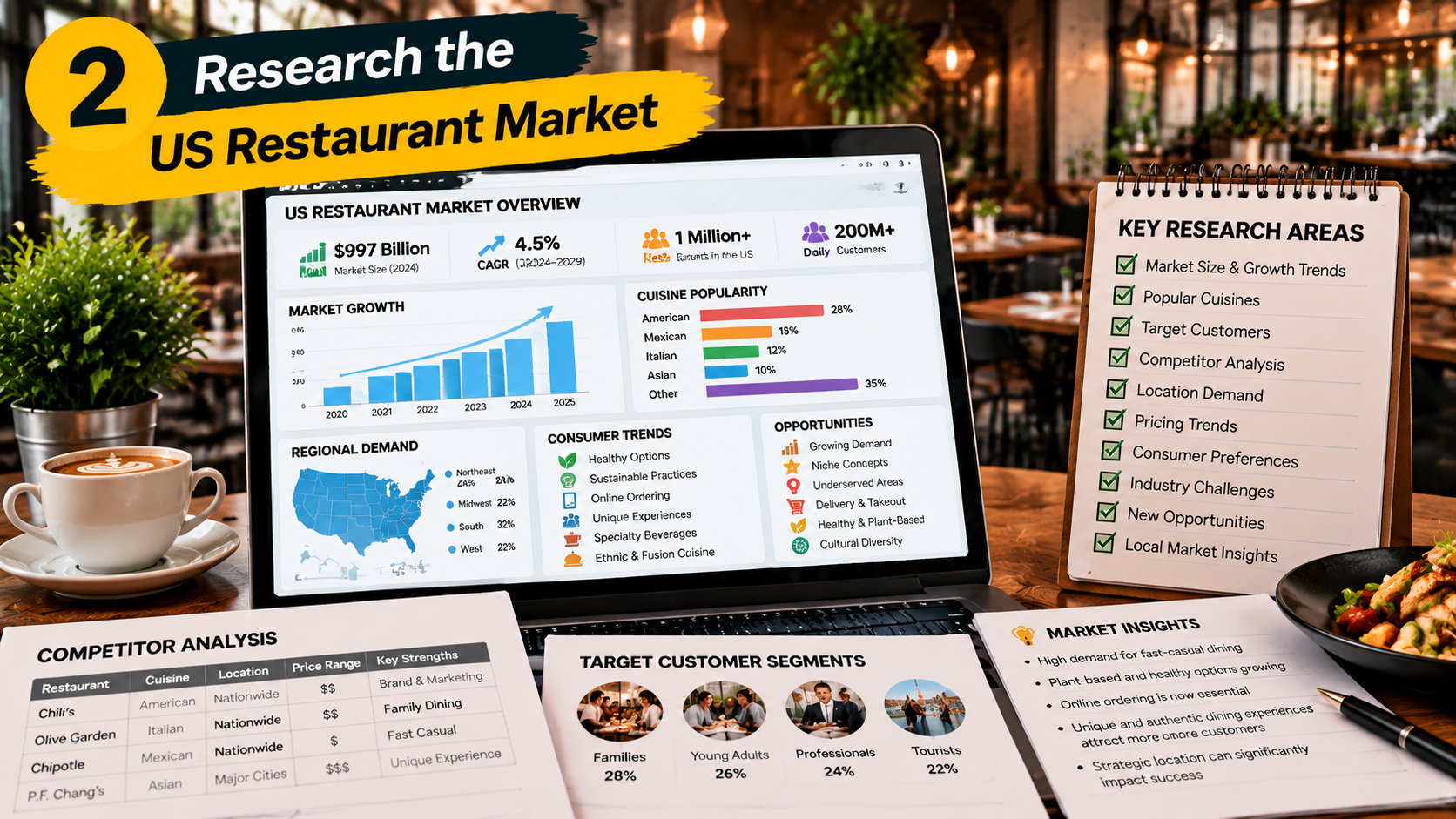
After deciding your cuisine type, the next important step is choosing your restaurant service style. Your service model determines how customers interact with your restaurant, how your kitchen operates, how many employees you need, and how much investment is required.
Many new restaurant owners focus mainly on food, but the service style has a major impact on profitability and daily operations. A fast-food restaurant, a luxury dining restaurant, and a food truck may all serve meals, but their business models are completely different.
Choosing the right restaurant model helps you control costs, design efficient operations, and create the right experience for your target customers.
Before selecting a service style, consider:
- Your startup budget
- Target customers
- Location
- Menu complexity
- Staffing requirements
- Long-term growth plans
Fast Food Restaurant
Fast-food restaurants focus on speed, convenience, and affordable meals. Customers usually expect quick ordering, fast preparation, and consistent food quality.
This model works well in locations with high customer traffic, such as shopping areas, busy streets, universities, and commercial zones.
Examples:
- Burgers
- Fried chicken
- Pizza
- Sandwiches
- Quick-service meals
Advantages:
- Lower menu complexity
- Faster customer service
- Can serve high customer volume
- Easier to standardize operations
Challenges:
- Highly competitive market
- Requires efficient kitchen systems
- Profitability depends on managing costs and sales volume
A successful fast-food restaurant usually depends on operational efficiency, strong branding, convenient locations, and consistent customer experience.
Fast Casual Restaurant
Fast casual restaurants combine the speed of fast food with better ingredients, modern design, and a more premium experience.
This model has become popular because many customers want convenient meals but also expect higher quality food and better dining environments.
Examples:
- Bowl restaurants
- Premium sandwiches
- Healthy meal concepts
- Modern ethnic cuisine restaurants
Advantages:
- Higher customer spending compared to traditional fast food
- Strong appeal among younger customers
- Suitable for dine-in, takeaway, and delivery
- Good potential for brand expansion
Challenges:
- Higher ingredient costs
- Requires stronger branding
- Customers expect better food quality
Fast-casual restaurants often succeed by offering a clear concept, efficient service, and a menu that balances quality with affordability.
Full-Service Restaurant
A full-service restaurant provides a complete dining experience where customers are seated and served by employees. This model focuses on food quality, hospitality, and customer relationships.
Full-service restaurants usually require more planning because they involve larger spaces, more employees, and higher operating costs.
Examples:
- Family restaurants
- Casual dining restaurants
- Ethnic cuisine restaurants
- Specialty dining concepts
Advantages:
- Creates stronger customer relationships
- Allows higher menu pricing
- Provides a complete dining experience
Challenges:
- Higher labor expenses
- More complex management
- Requires larger investment
A successful full-service restaurant needs strong leadership, trained staff, efficient operations, and consistent service quality.
Fine Dining Restaurant
Fine dining restaurants focus on premium food, exceptional service, and an upscale atmosphere. Customers visit these restaurants not only for meals but for a complete experience.
This model requires careful attention to every detail, including menu presentation, interior design, staff training, and customer service.
Examples:
- Luxury restaurants
- Chef-owned restaurants
- Specialty cuisine experiences
Advantages:
- Higher average customer spending
- Strong brand reputation potential
- Premium customer experience
Challenges:
- High startup investment
- Requires experienced professionals
- Higher customer expectations
Fine dining can create a powerful brand, but it requires excellent management and attention to detail.
Food Truck Restaurant
Food trucks provide an alternative way to enter the restaurant industry with lower investment compared to traditional restaurants.
They allow entrepreneurs to test their concept, build a customer base, and understand market demand before opening a permanent location.
Examples:
- Street food
- Tacos
- Burgers
- Desserts
- Specialty foods
Advantages:
- Lower startup costs
- Flexible locations
- Opportunity to test new concepts
Challenges:
- Limited kitchen space
- Weather dependency
- Local regulations and location restrictions
Food trucks can become successful businesses when they offer unique products, build local recognition, and maintain strong customer relationships.
Ghost Kitchen or Delivery-Only Restaurant
A ghost kitchen is a restaurant model that operates without a traditional dining area. Food is prepared in a commercial kitchen and sold through online ordering platforms and delivery services.
This model has become more popular because of increasing demand for online food ordering.
Examples:
- Delivery-only brands
- Online restaurant concepts
- Multiple food brands operating from one kitchen
Advantages:
- Lower rental costs
- Smaller physical space requirement
- Easier testing of new concepts
Challenges:
- Heavy dependence on delivery platforms
- Requires strong online marketing
- Less direct customer interaction
Ghost kitchens can succeed when they combine quality food, attractive packaging, digital marketing, and efficient delivery operations.
Franchise Restaurant
A franchise allows entrepreneurs to operate under an established restaurant brand by following an existing business model.
The franchise owner receives support such as training, branding guidelines, and operational systems while following the requirements of the parent company.
Examples:
- Fast-food franchises
- Coffee franchises
- Fast-casual brands
Advantages:
- Established brand recognition
- Proven operating system
- Training and support
Challenges:
- Franchise fees
- Less creative control
- Ongoing royalty payments
A franchise can reduce some challenges for beginners, but it still requires strong financial planning and effective management.
How to Select the Right Restaurant Service Style
Choosing a restaurant model should be based on your business goals rather than personal preference.
Consider Your Budget
Your available investment plays a major role. A food truck or ghost kitchen may require less capital, while a full-service restaurant requires more spending on space, equipment, and employees.
Understand Your Customers
Your target customers influence the best service model.
For example:
- Office workers may prefer quick lunch options.
- Families may prefer comfortable dining spaces.
- Busy customers may prefer delivery services.
Evaluate Your Location
The location should support your service style.
Examples:
- Business districts may support fast-casual concepts.
- Residential areas may support family restaurants.
- Tourist areas may support specialty dining.
Think About Future Growth
Choose a model that can grow with your goals.
Consider whether your concept can expand through:
- Multiple locations
- Catering services
- Online ordering
- Franchising
Common Mistakes When Choosing a Restaurant Model
Choosing Based Only on Personal Interest
A restaurant should match customer demand, not only the owner’s personal taste.
Starting Too Large
Many beginners invest heavily before proving their concept. Starting with a manageable model can reduce risk.
Ignoring Operating Complexity
A larger restaurant requires more:
- Employees
- Equipment
- Management systems
- Financial control
Key Takeaway
Choosing the right service style is a critical decision when learning how to start a restaurant in the USA. The best restaurant model depends on your budget, target customers, location, experience, and long-term business goals.
A successful restaurant does not always need a large investment. A well-designed concept with efficient operations and a clear customer focus can create a strong foundation for growth.
Nail Your Restaurant Ambiance: Creating a Memorable Customer Experience
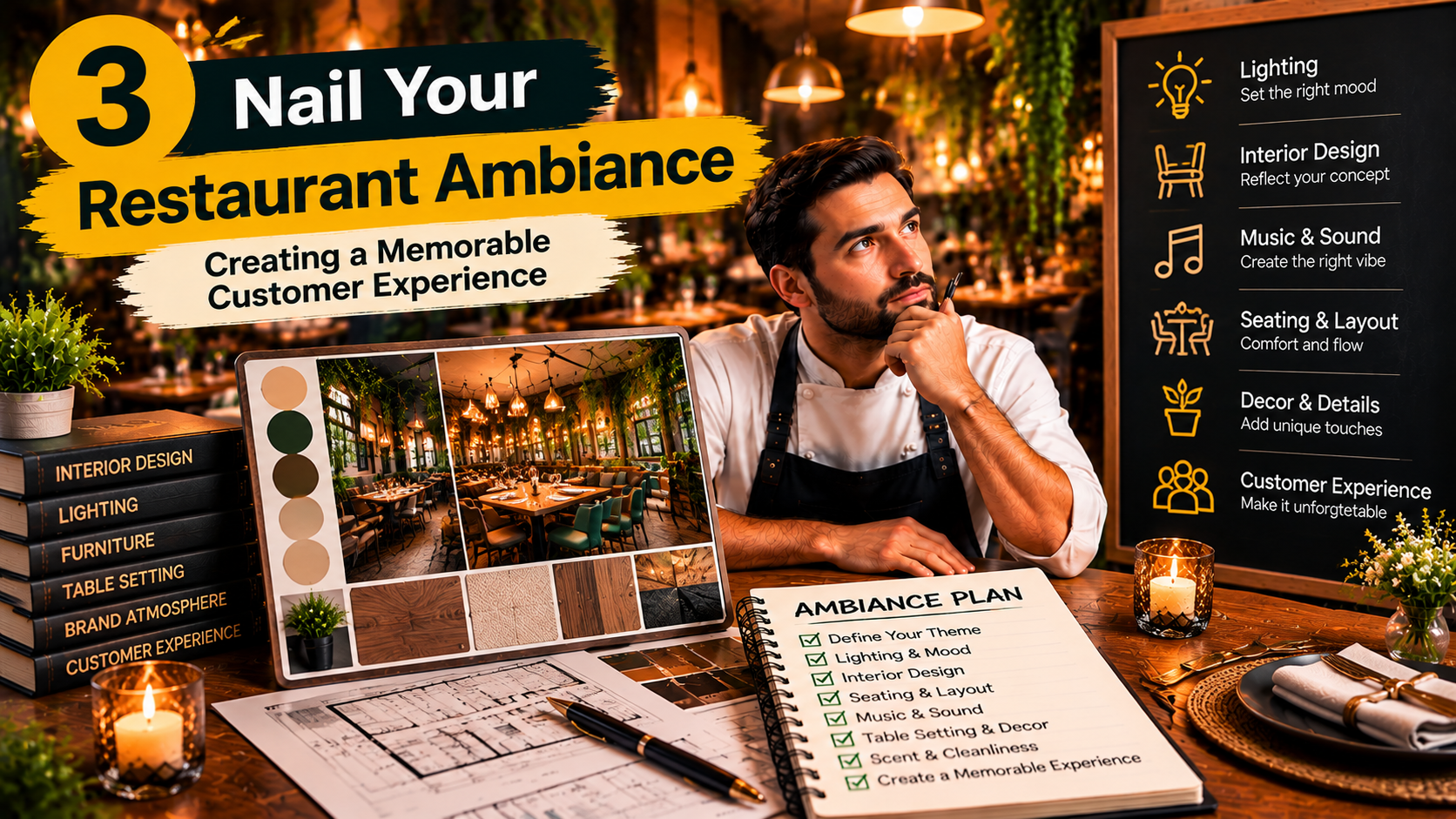
When starting a restaurant in the USA, many entrepreneurs focus mainly on food quality and pricing. While great food is essential, customers often judge a restaurant by the complete experience they receive. The atmosphere, interior design, lighting, seating arrangement, and service environment all influence how customers feel about your brand.
Your restaurant ambiance should communicate your concept before customers even taste the food. A family restaurant, luxury dining restaurant, and modern café should each create a different emotional experience.
A well-designed restaurant atmosphere can help you:
- Build a stronger brand identity
- Increase customer satisfaction
- Encourage repeat visits
- Create better social media visibility
- Support higher customer spending
Your goal is not to create the most expensive interior. Your goal is to create an environment that matches your target customers and restaurant concept.
Match Your Ambiance With Your Restaurant Concept
Your restaurant design should support the type of experience you promise customers.
For example, a fast-casual restaurant should focus on:
- Convenience
- Efficient seating
- Comfortable design
- Quick customer movement
A fine-dining restaurant should focus on:
- Premium atmosphere
- Elegant furniture
- Personalized service
- Attention to detail
A family restaurant should focus on:
- Comfortable seating
- Welcoming environment
- Space for groups
- Relaxed atmosphere
The best restaurant designs create consistency between the food, service, and environment.
Key Elements of Restaurant Ambiance
Interior Design and Layout
The interior design of your restaurant affects customer perception and movement. A good layout should balance appearance with functionality.
Important elements include:
- Seating arrangement
- Customer flow
- Waiting area
- Dining space
- Kitchen accessibility
A beautiful restaurant with poor customer movement can create operational problems. For example, overcrowded tables may reduce comfort, while an inefficient layout can slow down service.
Restaurant layout planning should consider both customer experience and employee efficiency.
Lighting Design
Lighting plays an important role in creating the mood of a restaurant.
Different concepts require different lighting approaches:
- Bright lighting can support fast-service restaurants.
- Warm lighting can create a comfortable dining atmosphere.
- Decorative lighting can strengthen a premium brand image.
The right lighting can influence how customers perceive your food, environment, and overall experience.
Colors and Brand Identity
Colors are an important part of restaurant branding because they influence customer perception.
For example:
- Warm colors may create an energetic and welcoming feeling.
- Neutral colors may support a modern and premium appearance.
- Natural colors may communicate freshness and health.
Your restaurant colors should match your:
- Logo
- Packaging
- Website
- Menu design
- Social media presence
A consistent visual identity helps customers remember your restaurant.
Furniture and Seating Comfort
Customer comfort directly affects how long people stay and how they evaluate their experience.
When selecting furniture, consider:
- Comfort
- Durability
- Maintenance requirements
- Space efficiency
A restaurant should provide enough comfort without reducing operational efficiency.
For example, a café designed for quick customer turnover may use different seating compared to a restaurant where customers spend several hours dining.
Create a Unique Restaurant Experience
Successful restaurants often create experiences that customers remember and share with others.
This can include:
- Open kitchen concepts
- Unique food presentation
- Cultural themes
- Interactive dining experiences
- Signature décor elements
For example, a restaurant specializing in traditional cuisine may use design elements that represent its cultural background while maintaining a modern customer experience.
The goal is to create something customers can describe to others.
Consider Technology in Restaurant Design
Modern restaurants increasingly include technology as part of the customer experience.
Examples include:
- Digital ordering systems
- QR code menus
- Self-service kiosks
- Online reservation systems
- Digital payment options
Technology should make the customer journey easier without removing the personal connection that makes restaurants unique.
Common Mistakes in Restaurant Ambiance Design
Designing Without Understanding Customers
A restaurant should be designed for its target audience, not only based on the owner’s personal preferences.
Spending Too Much on Appearance
A beautiful interior cannot compensate for:
- Poor food quality
- Slow service
- Weak operations
Design investment should be balanced with overall business needs.
Ignoring Employee Workflow
The kitchen and service areas must support employees. A poor layout can increase service time and create operational problems.
Key Takeaway
Restaurant ambiance is an important part of building a successful restaurant brand. Customers remember not only what they ate but also how they felt during their visit.
A strong restaurant concept combines:
- Quality food
- Comfortable environment
- Efficient operations
- Consistent branding
When your ambiance matches your concept and customer expectations, your restaurant becomes more than a place to eat; it becomes an experience customers want to return to.
Pinpoint What Makes Your Restaurant Unique: Building a Strong Competitive Advantage

The restaurant industry in the USA is highly competitive. Customers have thousands of options, from local restaurants to large national chains. Because of this, simply offering good food is often not enough. A successful restaurant needs a clear reason why customers should choose it over other options.
This is known as your Unique Selling Proposition (USP) or competitive advantage.
Your USP is the specific value that makes your restaurant different and memorable. It does not always mean creating something completely new. Sometimes, a restaurant becomes successful by doing something familiar in a better or more meaningful way.
For example:
- A pizza restaurant may focus on authentic Italian preparation methods.
- A burger restaurant may differentiate itself through premium ingredients and customization.
- A family restaurant may compete through exceptional service and a welcoming atmosphere.
A strong restaurant concept answers the customer’s question:
“Why should I visit your restaurant instead of another one?”
Identify Your Restaurant’s Unique Value
Your restaurant’s uniqueness can come from different areas of the business.
Unique Menu Offering
A distinctive menu is one of the strongest ways to differentiate your restaurant.
This can include:
- Signature dishes
- Family recipes
- Regional specialties
- Exclusive ingredients
- Seasonal menu items
For example, an Indian restaurant may differentiate itself by offering regional dishes that are not commonly available in the local market.
However, uniqueness should still be practical. A complicated menu with too many uncommon items can increase food costs and create operational challenges.
Better Customer Experience
Many successful restaurants compete through experience rather than only food.
Customer experience includes:
- Friendly service
- Faster ordering
- Comfortable environment
- Personalized attention
- Easy online ordering
A restaurant that makes customers feel valued can build stronger loyalty and generate repeat business.
Strong Brand Identity
Your brand is how customers recognize and remember your restaurant.
A strong restaurant brand includes:
- Restaurant name
- Logo
- Colors
- Interior style
- Packaging
- Online presence
- Communication style
For example, a modern health-focused café should have branding that communicates freshness, wellness, and quality.
Your branding should match the promise you make to customers.
Authenticity and Storytelling
Customers often connect with restaurants that have a meaningful story.
Your story may come from:
- Family traditions
- Cultural background
- Founder journey
- Special cooking techniques
- Community connection
For example, a restaurant serving traditional cuisine can share the history behind its recipes and create a stronger emotional connection with customers.
Authenticity helps small restaurants compete with larger brands.
Research Competitors Before Creating Your Difference
Before deciding what makes your restaurant unique, study your competitors.
Analyze:
- Their menu
- Pricing
- Customer reviews
- Service quality
- Restaurant design
- Online presence
Customer reviews are especially valuable because they reveal what people like and dislike.
Look for opportunities such as:
- Customers complaining about slow service
- Lack of healthy options
- Limited family-friendly restaurants
- Poor online ordering experience
These gaps can become opportunities for your restaurant.
Avoid Trying to Be Different in Everything
A common mistake among new restaurant owners is trying to create a concept that is completely different from the market.
A restaurant still needs to be understandable to customers.
A successful concept usually combines:
Familiar + Different
For example:
- A burger restaurant with a unique regional flavor
- A coffee shop with a cultural theme
- A traditional restaurant with modern service
Customers should quickly understand what you offer while having a reason to choose you.
Test Your Restaurant Idea Before Investing
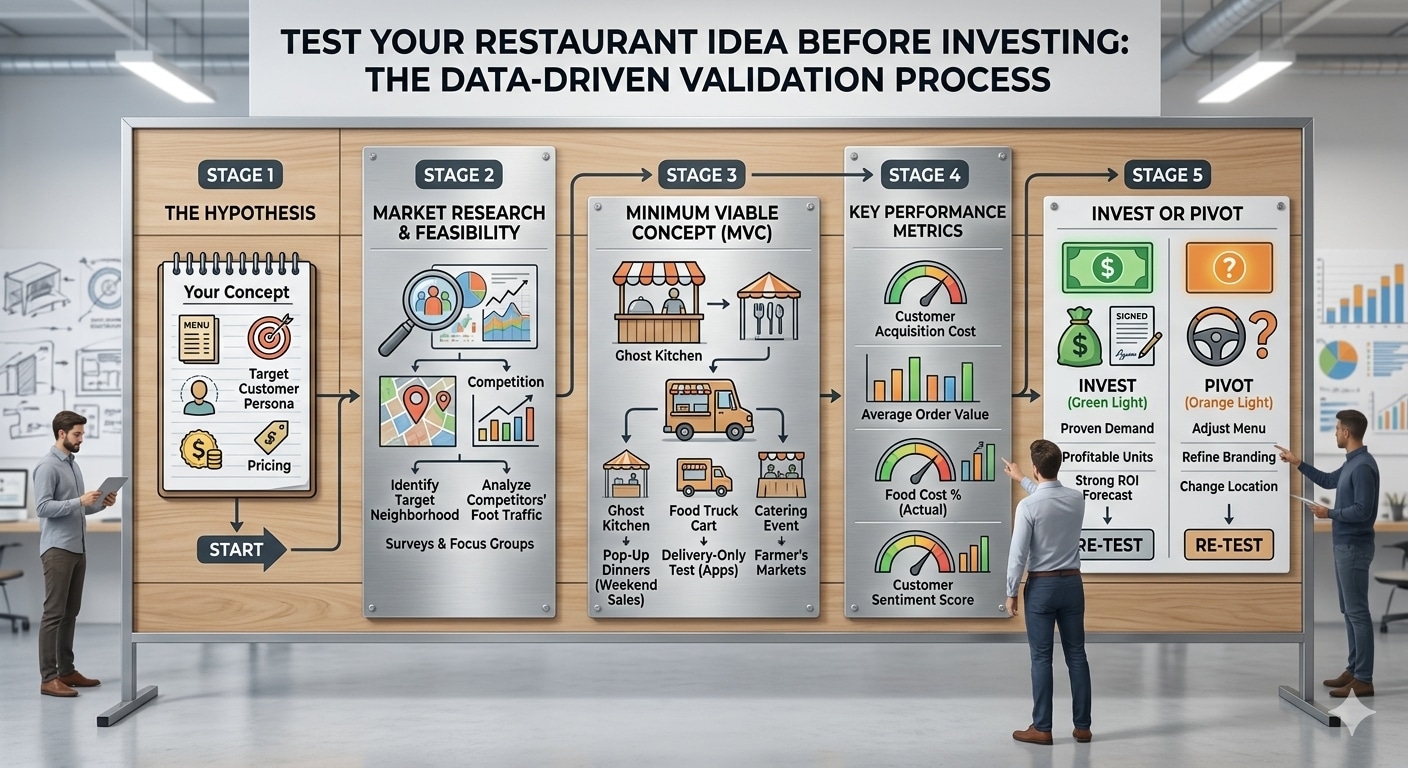
Before spending significant money, validate your concept.
You can test your idea through:
- Small food events
- Pop-up experiences
- Catering services
- Social media feedback
- Customer surveys
Testing helps you understand:
- What customers like
- What prices they accept
- Which menu items perform best
This reduces the risk of opening a restaurant without understanding customer demand.
Key takeaway
Creating a unique restaurant concept is not about being completely different from everyone else. It is about identifying what your restaurant does better, communicating that value clearly, and creating a reason for customers to return.
A strong USP helps with:
- Restaurant branding
- Marketing strategy
- Customer loyalty
- Competitive positioning
Research Local Gaps in the Market: Finding Restaurant Opportunities Before Opening
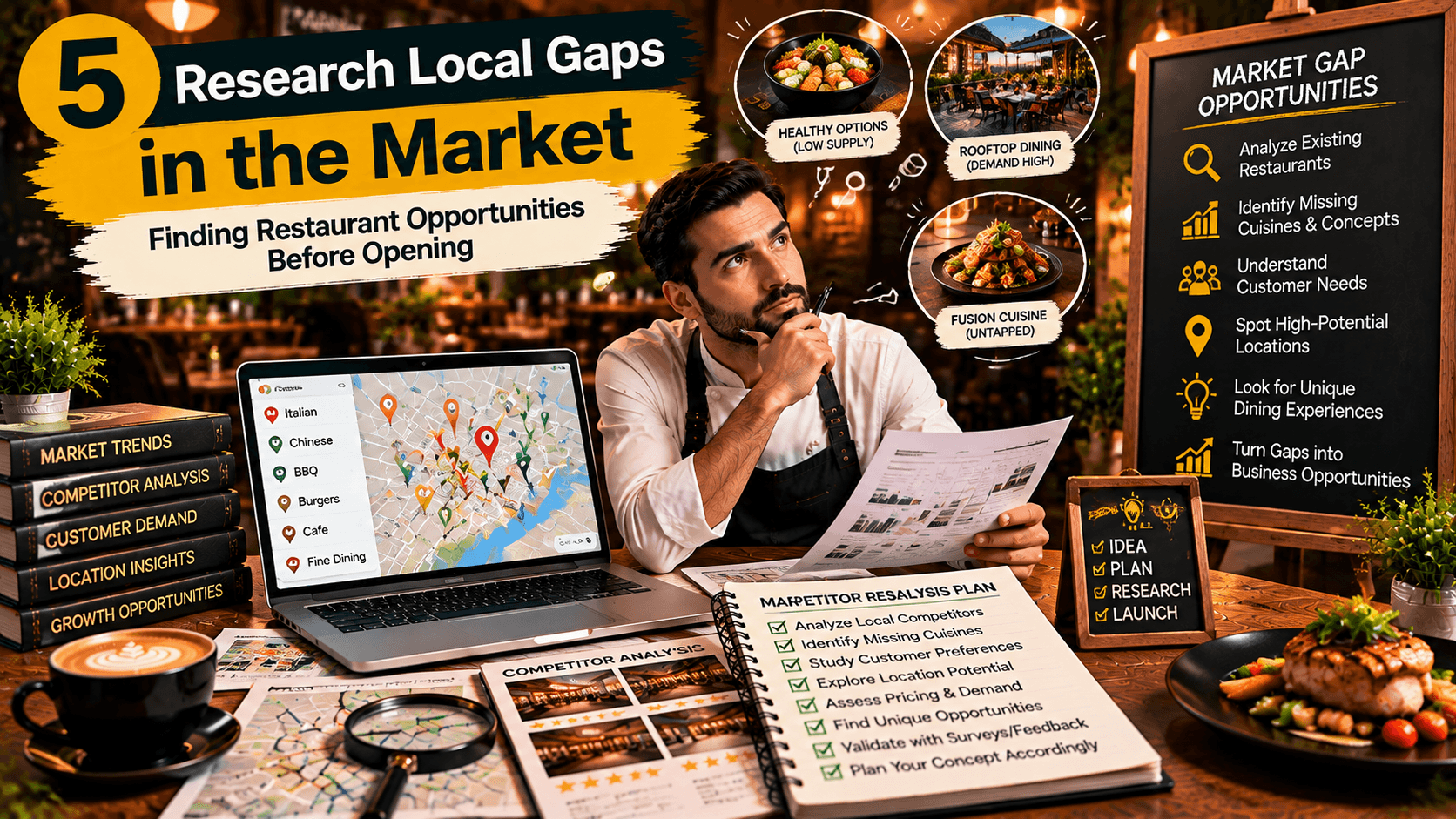
Before investing money in a restaurant, one of the most important steps is understanding your local market. A great restaurant idea can struggle if there is no customer demand, while a simple concept can succeed when it fills an unmet need.
Market gap analysis means identifying opportunities where customer needs are not being fully served by existing restaurants. Instead of opening a restaurant based only on personal preference, successful entrepreneurs study their area, understand customer behavior, and identify where their concept can provide additional value.
For example, a neighborhood may have many fast-food restaurants but no affordable healthy meal options. This creates a potential opportunity for a restaurant that focuses on fresh, convenient, and healthy food.
Understand Your Local Customers
The first step in finding a restaurant opportunity is understanding the people who live, work, and spend time in your target area.
Study factors such as:
- Age groups
- Income levels
- Lifestyle preferences
- Cultural background
- Eating habits
- Dining frequency
Customer needs can vary significantly between locations.
For example:
- A business district may have demand for quick lunch options.
- A residential area may need family-friendly restaurants.
- A university area may require affordable meals.
- A tourist location may support unique dining experiences.
Understanding your audience helps you create a restaurant concept that matches real demand.
Analyze Existing Restaurants in Your Area
Competitor research is essential when planning how to start a restaurant in the USA. Existing restaurants provide valuable information about customer preferences, pricing, and market opportunities.
Analyze:
- Restaurant types
- Menu offerings
- Pricing
- Customer reviews
- Service quality
- Online presence
You do not need to avoid all competition. In many cases, successful restaurants operate in competitive markets because strong demand already exists.
The key is finding your opportunity to compete differently.
Study Customer Reviews to Find Problems
Online reviews are one of the best sources of market information. Platforms such as Google Reviews, Yelp, and other restaurant directories show what customers appreciate and what problems they experience.
Look for repeated complaints such as:
- Slow service
- Poor food quality
- Limited menu options
- Lack of healthy choices
- Poor customer service
- Difficult ordering process
These complaints can reveal opportunities for your restaurant.
For example, if customers frequently complain that a specific cuisine lacks authentic options in your city, a restaurant focusing on authenticity may have an advantage.
Identify Underserved Food Categories
A market gap often exists when customers want something that is not easily available.
Examples of possible opportunities:
- Authentic international cuisine
- Affordable family dining
- Late-night food options
- Healthy meal concepts
- Halal food options
- Vegetarian or vegan restaurants
- Specialty desserts
- Local cultural cuisines
However, demand should always be verified before investing.
A missing restaurant category does not automatically mean there is a profitable opportunity. It may also indicate limited customer demand.
Use Online Research to Understand Demand
Digital research can help you understand what customers are searching for.
Useful sources include:
- Google Search trends
- Social media discussions
- Local food groups
- Restaurant review platforms
- Community forums
Research questions:
- What restaurants are people searching for?
- What food categories are becoming popular?
- What options do customers say they need?
This information can help shape your restaurant concept and marketing strategy.
Consider Location-Specific Opportunities
The same restaurant concept can perform differently depending on location.
Before choosing a location, evaluate:
Population Growth
Growing communities may create new demand for restaurants and services.
Competition Density
A location with many similar restaurants may require a stronger differentiation strategy.
Customer Accessibility
Consider:
- Parking availability
- Public transportation
- Visibility
- Nearby businesses
Local Lifestyle
Understand when and how customers spend money on dining.
For example, an area with many offices may support weekday lunch concepts, while a family neighborhood may support weekend dining.
Validate Your Restaurant Idea Before Opening
Market research should happen before signing leases or making large investments.
You can test your concept through:
- Pop-up events
- Catering services
- Food festivals
- Online pre-orders
- Social media surveys
Testing allows you to collect feedback about:
- Menu preferences
- Pricing acceptance
- Customer interest
- Brand perception
This reduces the risk of opening a restaurant without proof of demand.
Common Mistakes When Researching Market Opportunities
Assuming Everyone Will Like Your Idea
A restaurant concept should be based on customer demand, not only personal passion.
Ignoring Competition
Competitors provide valuable information about pricing, customer expectations, and market conditions.
Choosing a Location Without Research
A cheap location may not succeed if it does not have the right customers.
Following Trends Without Analysis
Popular food trends can create opportunities, but they should match your target market and business capabilities.
Key Takeaway
Researching local market gaps is one of the most important steps when learning how to start a restaurant in the USA. A successful restaurant does not simply enter the market; it identifies a customer need and creates a better solution.
Make Sure Your Restaurant Branding Reflects Your Concept: Building a Memorable Restaurant Identity
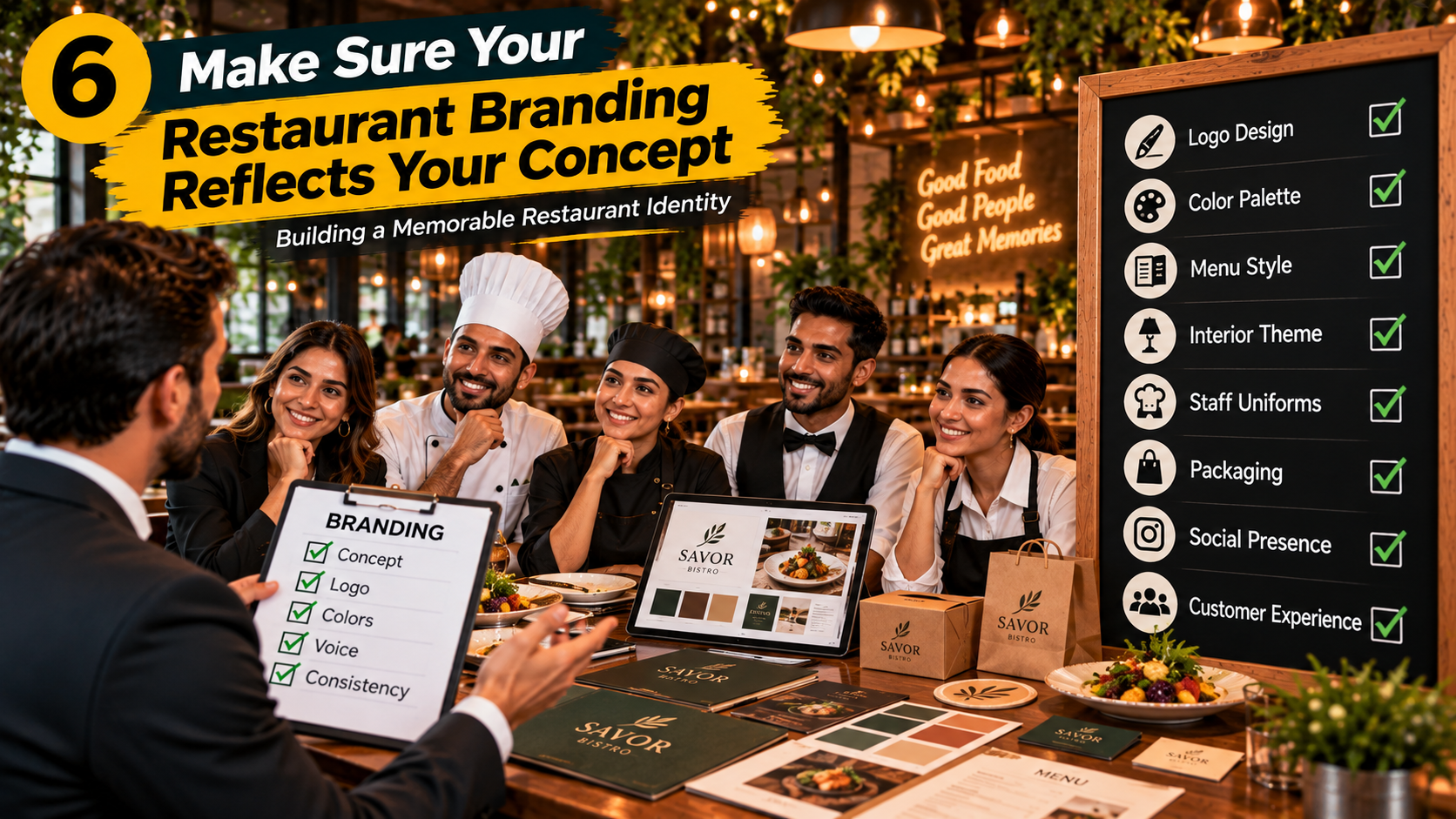
Restaurant branding is more than creating a logo or choosing attractive colors. It is the process of creating a clear identity that helps customers understand what your restaurant represents and why they should choose you over competitors.
A strong restaurant brand connects your food, atmosphere, customer experience, and marketing message into one consistent identity. When customers see your logo, visit your website, view your menu, or walk into your restaurant, they should immediately recognize your concept.
For example, a luxury steakhouse, a family-friendly restaurant, and a modern coffee shop should not look or communicate the same way because they serve different customers and create different experiences.
Good restaurant branding helps you:
- Build customer recognition
- Create trust
- Encourage repeat visits
- Support online marketing
- Differentiate from competitors
Your brand should communicate a simple message:
“Who are we, and what experience can customers expect from us?”
Align Your Brand With Your Restaurant Concept
Your branding should be a reflection of your restaurant concept, not something created separately.
Every element of your brand should support your:
- Cuisine type
- Target customers
- Price level
- Service style
- Restaurant atmosphere
For example:
A premium Italian restaurant may use:
- Elegant design
- Sophisticated colors
- High-quality photography
- Professional communication style
A casual burger restaurant may use:
- Bold colors
- Friendly messaging
- Simple menu design
- Fun customer experience
When branding matches the restaurant concept, customers develop clearer expectations before visiting.
Choose a Strong Restaurant Name
Your restaurant name is one of the first things customers notice. A good name should be:
- Easy to remember
- Easy to pronounce
- Relevant to your concept
- Available for online use
Before finalizing your restaurant name, check:
- Domain name availability
- Social media usernames
- Trademark availability
- Similar businesses in your area
A strong name helps with future growth because it can become part of your website, packaging, advertising, and customer recognition.
Create a Professional Visual Identity
Your visual identity includes all the design elements customers associate with your restaurant.
Important elements include:
Logo Design
Your logo should represent your restaurant personality and work across different platforms, including:
- Website
- Menu
- Packaging
- Social media
- Signboards
A good logo does not need to be complicated. It needs to be clear, memorable, and suitable for your target audience.
Brand Colors and Typography
Colors and fonts influence how customers perceive your restaurant.
For example:
- Warm colors can create an energetic and welcoming feeling.
- Minimal designs can communicate modern and premium positioning.
- Natural colors can support health-focused concepts.
Your colors and fonts should remain consistent across:
- Website
- Menu design
- Social media
- Restaurant interior
- Marketing materials
Consistency creates a stronger brand identity.
Develop Your Restaurant Brand Voice
Your brand voice is how your restaurant communicates with customers.
It affects:
- Website content
- Social media posts
- Advertisements
- Customer messages
Examples:
- A family restaurant may use a warm and welcoming tone.
- A premium restaurant may use a sophisticated and elegant tone.
- A casual food brand may use a friendly and conversational style.
- A consistent brand voice helps customers understand your personality.
Build Your Online Restaurant Presence
Modern restaurant branding requires a strong digital presence. Many customers discover restaurants online before visiting physically.
Important platforms include:
Restaurant Website
Your website should include:
- Restaurant information
- Menu
- Location
- Contact details
- Online ordering options
- Reservation information
A professional website also improves your visibility in search engines.
Google Business Profile
A Google Business Profile helps customers find your restaurant through local search.
It allows you to display:
- Address
- Opening hours
- Photos
- Reviews
- Contact information
Local SEO is especially important for restaurants because many customers search for food options near their location.
Social Media Presence
Platforms like Instagram, Facebook, and TikTok can help restaurants showcase:
- Food photos
- Customer experiences
- Behind-the-scenes content
- Promotions
- New menu items
Visual content is especially powerful for restaurants because customers often choose restaurants based on appearance and experience.
Restaurant Packaging and Customer Touchpoints
Branding should continue beyond the restaurant itself.
Customers interact with your brand through:
- Food packaging
- Delivery bags
- Menus
- Staff uniforms
- Loyalty cards
- Signage
Every customer interaction is an opportunity to strengthen brand recognition.
For example, consistent packaging design can make a delivery order feel like an extension of the restaurant experience.
Common Restaurant Branding Mistakes
Creating a Brand Without Understanding Customers
A brand should attract your target audience, not only reflect the owner’s personal taste.
Inconsistent Design
Using different colors, fonts, or messages across platforms can weaken brand recognition.
Focusing Only on the Logo
A logo is only one part of branding. A strong brand includes the complete customer experience.
Copying Competitors
Learning from competitors is useful, but your restaurant needs its own identity.
Key Takeaway
Restaurant branding is an essential part of building a successful restaurant business. A strong brand helps customers recognize your restaurant, understand your value, and remember their experience.
Your branding should connect every part of your business:
- Food concept
- Restaurant design
- Customer experience
- Online presence
- Marketing strategy
Create a Business Plan for Your Restaurant: Turning Your Idea Into a Real Business Strategy
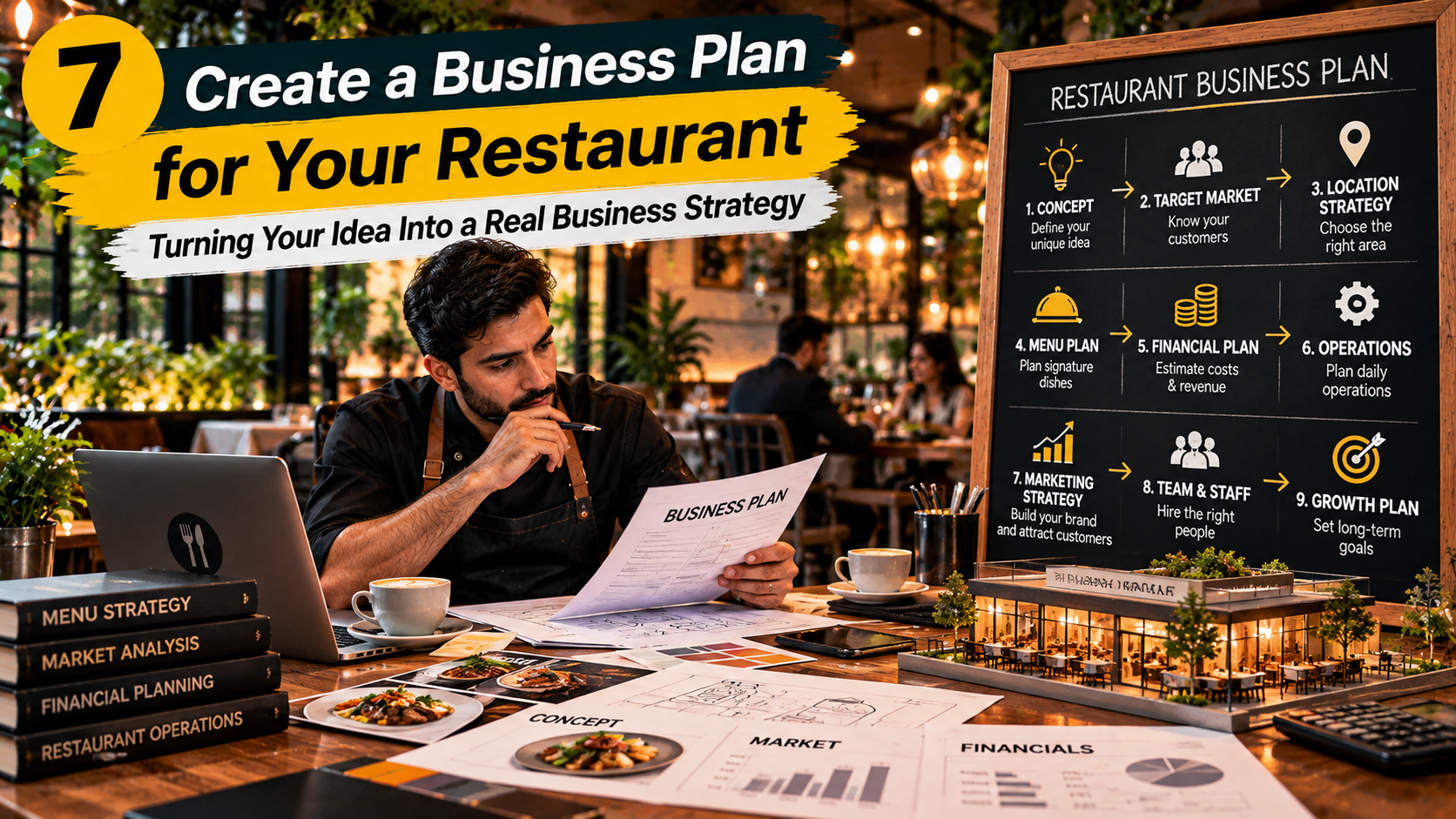
A restaurant idea becomes a real business only when it is supported by a clear plan. A restaurant business plan is a document that explains your concept, target market, financial expectations, operations, and growth strategy.
Many first-time restaurant owners make the mistake of investing money before understanding the complete business picture. They may have a great menu idea but lack information about costs, customers, competition, and daily operations.
A well-prepared business plan helps you:
- Understand whether your restaurant idea is realistic
- Estimate restaurant startup costs
- Identify potential challenges
- Attract investors or lenders
- Create a roadmap for daily operations
Whether you are opening a small café, food truck, fast-casual restaurant, or full-service dining establishment, a restaurant business plan provides direction before you invest significant resources.
Why Do You Need a Restaurant Business Plan?
A restaurant business plan is not only for banks or investors. It is a practical tool that helps you make better decisions.
Before opening your restaurant, you need answers to important questions:
- Who are your target customers?
- What problem does your restaurant solve?
- How much money is required to start?
- How will you attract customers?
- What are your expected monthly expenses?
- How will your restaurant generate profit?
A business plan forces you to research these areas before making expensive commitments.
For example, you may discover during planning that your chosen location has high rent, strong competition, or limited demand. Identifying these challenges early can save significant money.
Key Components of a Restaurant Business Plan
A complete restaurant business plan usually includes several important sections. Each section explains a different part of your business strategy.
1. Executive Summary
The executive summary is the first section of your business plan, but it is usually written after completing the other sections.
It provides a short overview of your restaurant idea.
It should explain:
- Restaurant name and concept
- Cuisine type
- Service style
- Target customers
- Location
- Business goals
- Financial overview
For example:
“A fast-casual Mediterranean restaurant serving affordable, fresh meals to young professionals in a growing urban area.”
A strong executive summary helps investors, lenders, or partners quickly understand your business idea.
2. Restaurant Concept and Business Description
This section explains what makes your restaurant unique.
Include:
- Cuisine type
- Restaurant style
- Brand identity
- Customer experience
- Competitive advantage
Explain:
- What food will you serve?
- Why will customers choose your restaurant?
- What makes your concept different?
This section connects your restaurant idea with your target market.
3. Market Research and Customer Analysis
Understanding your market is one of the most important parts of restaurant planning.
Your research should identify:
- Target customers
- Local demographics
- Customer preferences
- Competitors
- Market opportunities
Consider factors such as:
- Age groups
- Income levels
- Lifestyle
- Dining habits
For example, a restaurant near a university may focus on affordable meals and quick service, while a restaurant in a business district may focus on lunch convenience.
4. Competitor Analysis
Every restaurant operates in a competitive environment. Studying competitors helps you understand what already exists and where opportunities are available.
Analyze:
- Similar restaurants
- Menu pricing
- Customer reviews
- Service quality
- Marketing strategies
The goal is not simply to copy competitors. It is to identify how your restaurant can offer something better or different.
5. Menu Strategy
Your menu is a major part of your restaurant business model.
A business plan should explain:
- Main menu categories
- Signature dishes
- Pricing strategy
- Food cost considerations
- Seasonal options
A successful menu balances:
- Customer demand
- Preparation efficiency
- Ingredient costs
- Profit potential
A large menu is not always better. Many successful restaurants focus on fewer items that they can prepare consistently and profitably.
6. Operations Plan
The operations section explains how your restaurant will function every day.
It should cover:
- Operating hours
- Food preparation process
- Supplier management
- Inventory control
- Customer service procedures
- Technology systems
A strong operations plan helps maintain consistency and quality.
7. Staffing Plan
Employees play an important role in restaurant success.
Your business plan should identify:
- Required positions
- Hiring strategy
- Training approach
- Labor costs
Possible positions include:
- Restaurant manager
- Chef
- Kitchen staff
- Servers
- Cashiers
- Cleaning staff
Proper staffing planning helps control labor expenses and maintain service quality.
8. Marketing Strategy
A restaurant marketing plan explains how you will attract and retain customers.
Your strategy may include:
Online Marketing
- Restaurant website
- Search engine optimization (SEO)
- Social media marketing
- Online reviews
Local Marketing
- Community partnerships
- Opening promotions
- Events
- Local advertising
A restaurant should begin building awareness before opening day, not after.
9. Financial Plan
The financial section explains whether your restaurant can become a sustainable business.
It should include:
Startup Costs
Examples:
- Lease deposit
- Renovation
- Equipment
- Licenses
- Inventory
- Marketing
Monthly Operating Costs
Examples:
- Rent
- Salaries
- Utilities
- Ingredients
- Insurance
- Software
Revenue Estimates
Estimate:
- Expected customers
- Average order value
- Monthly sales
Financial planning helps determine whether your restaurant idea is financially realistic.
Common Mistakes When Creating a Restaurant Business Plan
Underestimating Costs
Many new owners focus only on opening expenses and forget ongoing costs.
Ignoring Market Research
A restaurant should be built around customer demand, not assumptions.
Overcomplicating the Concept
A clear and focused restaurant idea is usually easier to operate and market.
Creating Unrealistic Financial Expectations
A business plan should use realistic assumptions rather than overly optimistic predictions.
Key Takeaway
A restaurant business plan transforms an idea into a structured strategy. It helps you understand your customers, control costs, prepare operations, and make informed decisions before investing.
A strong plan should answer one important question:
“How will this restaurant attract customers, operate efficiently, and become a profitable business?”
Plan Your Restaurant Funding Strategy: Understanding Startup Capital and Financing Options
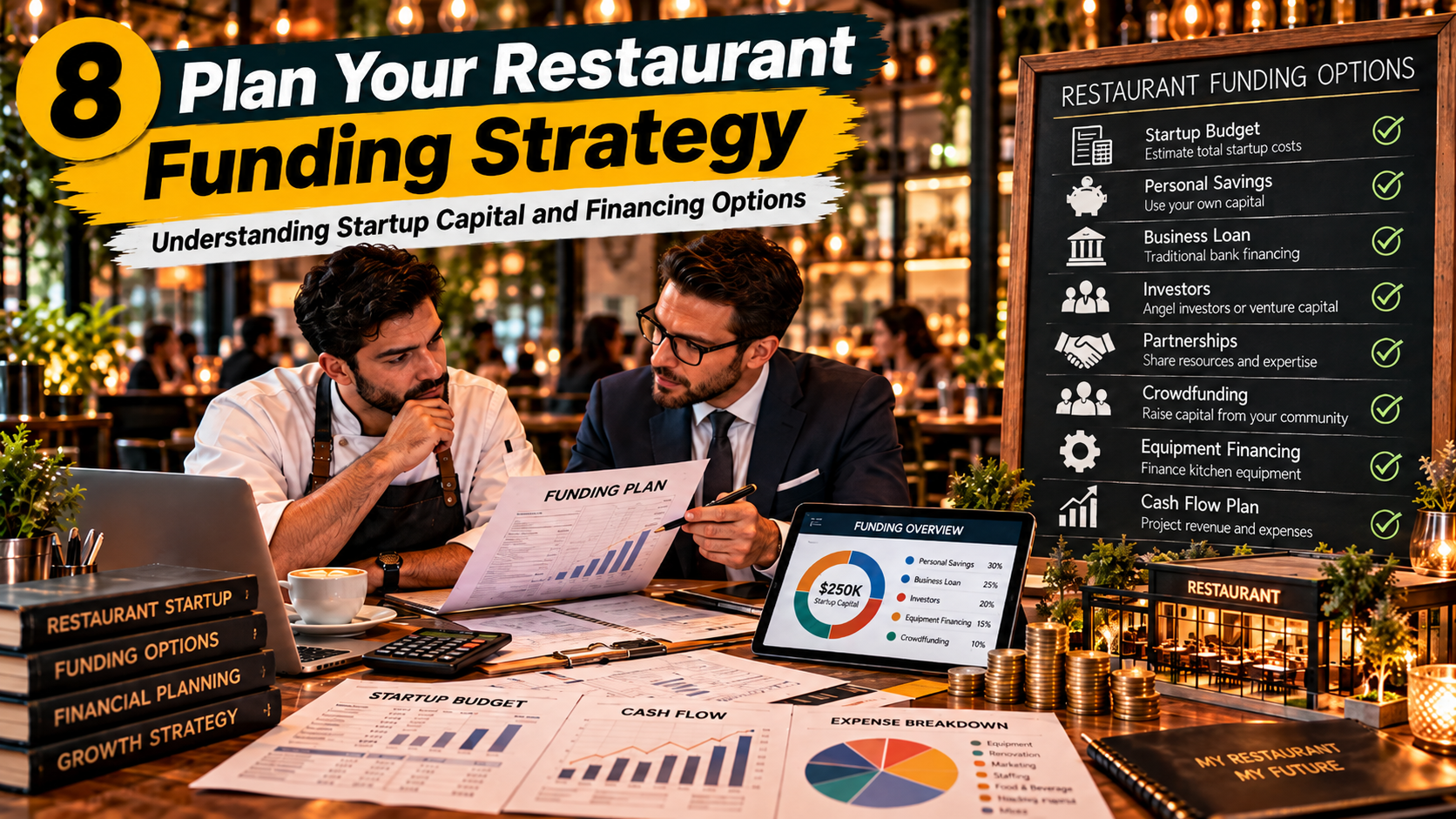
Starting a restaurant requires careful financial planning because the initial investment is usually one of the biggest challenges for new restaurant owners. A great restaurant idea can only become a reality when you have enough capital to cover the costs of opening and operating the business.
Many beginners focus only on the cost of opening the doors but forget that a restaurant needs money to survive during the early months. Expenses such as rent, employee salaries, inventory, utilities, marketing, and unexpected repairs continue even before the restaurant becomes profitable.
A strong restaurant funding strategy helps you understand:
- How much money you need
- Where the funding will come from
- Which financing option fits your situation
- How to manage financial risk
Before choosing a funding method, you should first calculate your estimated restaurant startup costs and create a realistic financial plan.
How Much Funding Does a Restaurant Need?
The amount of money required to start a restaurant depends on several factors, including:
- Restaurant type
- Location
- Size of the space
- Equipment requirements
- Renovation needs
- Number of employees
- Menu complexity
For example, a small food truck or delivery-only kitchen may require less investment compared to a full-service restaurant with a large dining area.
Your funding calculation should include two categories:
Startup Costs
Startup costs are expenses required before opening your restaurant.
These may include:
Business Registration and Legal Costs
Before operating, you may need to pay for:
- Business registration
- Permits
- Licenses
- Professional services
These costs depend on your business structure and location.
Restaurant Location Costs
Your location is usually one of the largest financial commitments.
Costs may include:
- Security deposit
- Lease payments
- Renovation
- Interior design
- Construction work
A restaurant location should not only look attractive but also fit your budget and expected revenue.
Equipment and Setup Costs
Restaurants require specialized equipment depending on the concept.
Examples:
- Cooking equipment
- Refrigeration units
- Preparation tools
- Storage systems
- POS systems
- Furniture
A detailed restaurant equipment checklist helps prevent unexpected expenses.
Initial Inventory
Before opening, you need supplies such as:
- Food ingredients
- Packaging materials
- Cleaning products
- Beverages
Inventory planning is important because over-purchasing can increase waste, while under-purchasing can affect operations.
Marketing and Branding Costs
A restaurant needs visibility before opening.
Initial marketing expenses may include:
- Website development
- Logo design
- Photography
- Social media promotion
- Opening campaigns
Building awareness before launch can help attract your first customers.
Working Capital
Many new restaurant owners underestimate the importance of working capital.
Working capital is the money needed to operate your restaurant after opening.
It covers:
- Employee salaries
- Rent
- Utilities
- Food supplies
- Maintenance
- Marketing
- Software subscriptions
A restaurant may not become profitable immediately, so having enough working capital helps the business survive during the early stage.
Restaurant Financing Options Compared
There are several ways to finance a restaurant business. The right option depends on your financial situation, business plan, and growth goals.
Personal Savings
Using your own money is one of the most common ways entrepreneurs start businesses.
Advantages:
- Full ownership control
- No loan payments
- No interest costs
Challenges:
- Limited available capital
- Personal financial risk
Personal savings can work well for smaller concepts or as part of a larger funding strategy.
Family and Friends Funding
Some entrepreneurs receive financial support from family members or close contacts.
This option can provide flexible funding, but it is important to create clear agreements about:
- Ownership
- Repayment terms
- Responsibilities
Treating personal investments professionally helps prevent future misunderstandings.
Bank Loans
Traditional business loans are another option for restaurant financing.
Banks usually evaluate:
- Business plan
- Credit history
- Financial projections
- Collateral
- Owner experience
A strong restaurant business plan increases your chances of presenting a convincing funding request.
SBA Loans
The U.S. Small Business Administration (SBA) supports small businesses by helping entrepreneurs access financing through approved lenders.
SBA-backed loans are often considered by small business owners because they can provide structured financing options.
Restaurant owners should research:
- Eligibility requirements
- Loan terms
- Required documentation
Investors and Business Partners
Some restaurant owners choose to work with investors who provide capital in exchange for ownership interest.
This can be useful when:
- The concept requires significant investment
- The owner lacks sufficient capital
- Additional expertise is valuable
However, bringing investors means sharing ownership and decision-making responsibilities.
Franchise Financing
Entrepreneurs opening a franchise may have access to financing options designed specifically for franchise businesses.
Franchise financing may help cover:
- Franchise fees
- Equipment
- Location setup
- Initial operations
However, franchise owners must still carefully evaluate costs, fees, and expected returns.
Equipment Financing
Restaurant equipment can represent a significant expense. Equipment financing allows businesses to pay for equipment over time rather than purchasing everything upfront.
This option may help preserve cash flow during the startup phase.
Crowdfunding
Some entrepreneurs use crowdfunding platforms to raise money from customers and supporters.
This approach can also help validate customer interest before opening.
Successful crowdfunding usually requires:
- Strong brand story
- Marketing effort
- Community engagement
How to Choose the Right Funding Strategy
The best funding approach depends on your restaurant concept and financial situation.
Consider:
Your Investment Capacity
Understand how much money you can personally invest without creating financial pressure.
Your Business Model
A small café may need a different funding strategy than a large full-service restaurant.
Your Growth Goals
If you plan to expand into multiple locations, you may need a larger funding structure.
Your Risk Level
Avoid borrowing more than your business can realistically support.
Common Funding Mistakes New Restaurant Owners Make
Starting Without Enough Capital
Many restaurants fail because they run out of money before reaching stability.
Ignoring Operating Expenses
Opening costs are only the beginning. Monthly expenses must also be planned.
Taking Too Much Debt
Large loan payments can create financial pressure, especially during the early months.
Not Creating Financial Projections
A restaurant should understand expected revenue, costs, and break-even requirements before opening.
Key Takeaway
A successful restaurant funding strategy is not only about finding money; it is about choosing the right financial structure for your business.
Before opening your restaurant, understand:
- How much capital you need
- Where the money will come from
- How you will manage expenses
- How long your business can operate before reaching profitability
Proper financial planning gives your restaurant a stronger foundation and reduces the risk of failure.
Calculate Restaurant Startup and Ongoing Costs: Understanding the Real Investment Required to Open a Restaurant
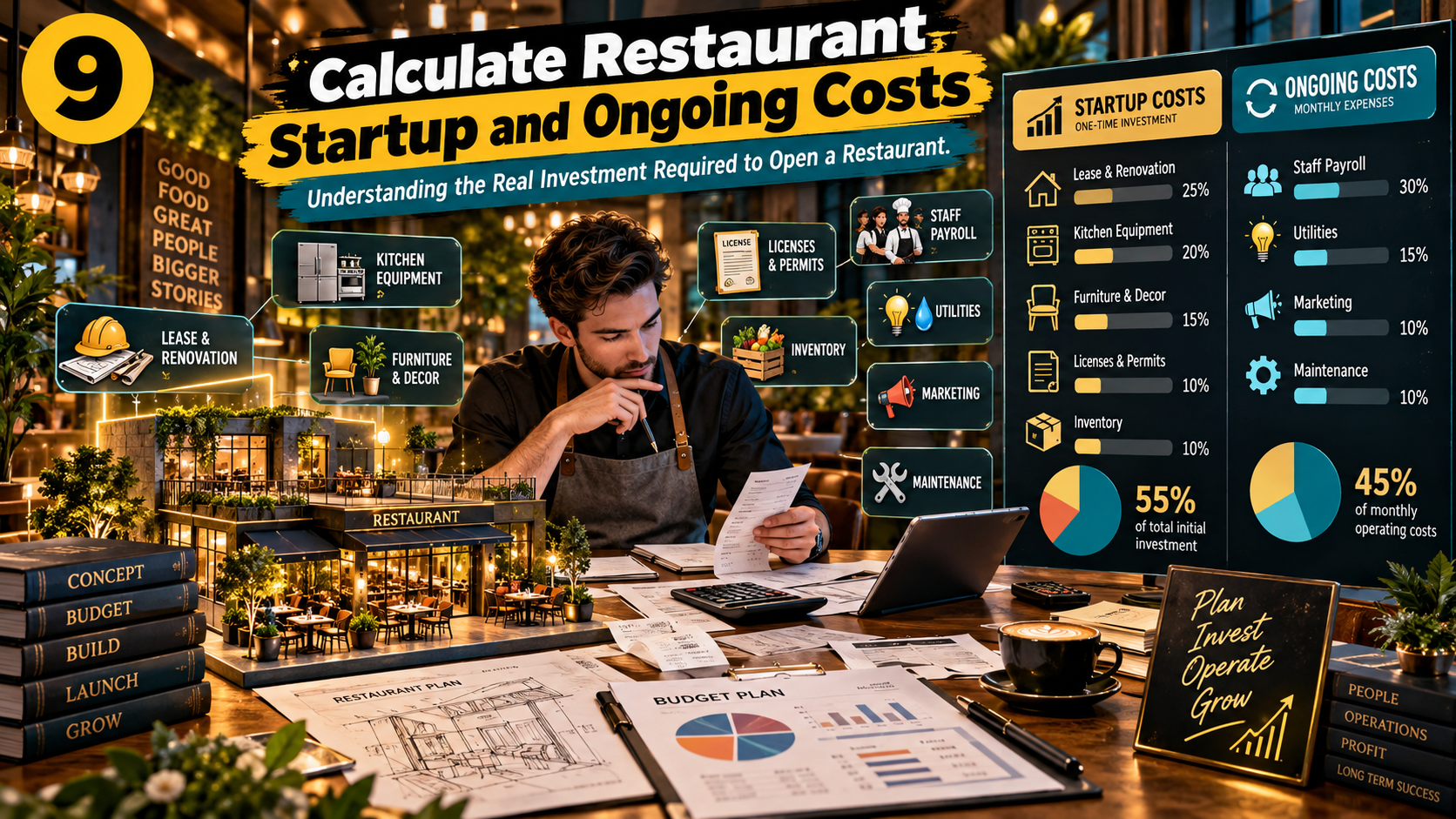
One of the most important steps when learning how to start a restaurant in the USA is understanding the true financial investment required. Many new restaurant owners focus only on the cost of opening the doors but underestimate the expenses needed to operate the business successfully after launch.
A restaurant requires continuous investment in areas such as rent, employees, food supplies, maintenance, marketing, and technology. Creating a realistic restaurant startup cost breakdown helps you avoid financial problems and make better decisions before investing.
The total cost of opening a restaurant depends on several factors:
- Restaurant type
- Location
- Size of the space
- Menu complexity
- Equipment requirements
- Service model
For example, a small coffee shop, a food truck, and a full-service restaurant will have completely different financial requirements.
Understanding Restaurant Startup Costs
Restaurant startup costs are the expenses required before opening your business. These costs prepare your restaurant for operation and include everything from legal setup to equipment installation.
A proper startup budget should include both expected costs and unexpected expenses because construction delays, equipment issues, or additional permits can increase the initial investment.
Business Registration and Legal Costs
Before opening a restaurant, you need to legally establish your business.
These costs may include:
- Business registration fees
- Legal consultation
- Accounting services
- Trademark registration
- Business licenses
The exact requirements vary by state and city, so restaurant owners should research local regulations before starting the process.
A properly registered business also helps when applying for financing, opening bank accounts, and working with suppliers.
Restaurant Location and Lease Expenses
Location is often one of the largest investments in a restaurant business. A good location can increase visibility and customer traffic, but it can also create high financial pressure if the rent is not aligned with expected revenue.
Location-related costs may include:
- Security deposit
- Advance rent payments
- Lease preparation
- Renovation requirements
- Construction work
Before signing a lease, evaluate:
- Customer accessibility
- Nearby businesses
- Parking availability
- Competition
- Expected sales potential
A lower-cost location is not always better if it does not attract your target customers.
Renovation and Interior Design Costs
Most restaurant spaces require some level of modification before opening.
Renovation expenses may include:
- Kitchen construction
- Electrical work
- Plumbing
- Flooring
- Lighting
- Interior decoration
- Signage
Your restaurant design should balance appearance with functionality. Spending too much on decoration while ignoring operational needs can create financial challenges.
A successful restaurant layout should support:
- Customer comfort
- Employee workflow
- Efficient service
Restaurant Equipment Costs
Restaurant equipment is a major part of startup investment. The equipment you need depends on your cuisine and service style.
Common equipment includes:
Kitchen Equipment
- Cooking equipment
- Refrigerators and freezers
- Preparation tables
- Storage systems
- Dishwashing equipment
Front-of-House Equipment
- Tables and chairs
- POS systems
- Payment terminals
- Display systems
Technology Equipment
- Online ordering systems
- Inventory software
- Security systems
A detailed restaurant equipment checklist helps owners avoid missing essential items and prevents unnecessary purchases.
Initial Food and Inventory Costs
Before opening, restaurants need initial supplies to begin operations.
This includes:
- Ingredients
- Beverages
- Packaging materials
- Cleaning supplies
- Disposable items
Inventory planning is important because food products have expiration dates and poor management can increase waste.
Restaurant owners should develop relationships with reliable suppliers to maintain consistent quality and control costs.
Marketing and Branding Costs
A restaurant needs customers from the beginning, which makes marketing an important startup expense.
Initial marketing costs may include:
- Logo and branding design
- Website development
- Professional food photography
- Social media setup
- Digital advertising
- Opening promotions
Modern restaurants should establish an online presence before opening because many customers search online before choosing where to eat.
Important digital assets include:
- Restaurant website
- Google Business Profile
- Social media accounts
Insurance Costs
Restaurant insurance protects your business from unexpected financial risks.
Common types of restaurant insurance include:
- General liability insurance
- Property insurance
- Workers’ compensation insurance
- Business interruption insurance
The exact insurance requirements depend on your location, business structure, and number of employees.
Employee Hiring and Training Costs
Labor is one of the largest ongoing expenses for restaurants.
Before opening, you may need to spend money on:
- Recruitment
- Employee training
- Uniforms
- Payroll setup
- Staff onboarding
A successful restaurant requires trained employees who understand:
- Food safety
- Customer service
- Restaurant procedures
Investing in training can improve service quality and reduce operational problems.
Ongoing Restaurant Operating Costs
Opening your restaurant is only the beginning. After launch, you need enough money to cover regular operating expenses.
These expenses include:
Rent and Utilities
Monthly costs may include:
- Building rent
- Electricity
- Gas
- Water
- Internet
- Waste management
Restaurant owners should carefully monitor these expenses because fixed costs continue even during slower business periods.
Food and Ingredient Costs
Food costs directly affect restaurant profitability.
Important factors include:
- Supplier pricing
- Portion control
- Food waste
- Menu pricing
Many successful restaurants regularly analyze food costs to maintain healthy profit margins.
Labor Costs
Employee expenses include:
- Salaries
- Wages
- Payroll taxes
- Benefits
- Training costs
Efficient scheduling helps restaurants maintain good service while controlling labor expenses.
Technology and Software Costs
Modern restaurants often depend on technology for daily operations.
Examples:
- POS systems
- Accounting software
- Inventory management tools
- Online ordering platforms
- Reservation systems
Technology can improve efficiency, but restaurant owners should choose solutions that match their actual needs and budget.
Marketing and Customer Acquisition Costs
Restaurants need continuous marketing to attract new customers and maintain visibility.
Ongoing marketing may include:
- Social media content
- Local advertising
- SEO
- Promotions
- Customer loyalty programs
A strong marketing strategy helps restaurants build long-term customer relationships.
Create a Restaurant Budget Before Opening
Before investing, create a detailed financial plan that separates:
One-Time Startup Expenses
Examples:
- Equipment
- Renovation
- Licenses
- Initial inventory
Monthly Operating Expenses
Examples:
- Rent
- Payroll
- Food supplies
- Marketing
This approach helps you understand how much capital is required before your restaurant becomes financially stable.
Common Mistakes When Estimating Restaurant Costs
Underestimating Hidden Expenses
Unexpected costs can occur during construction, licensing, and equipment installation.
Spending Too Much Before Testing the Concept
Some owners invest heavily before proving customer demand.
Ignoring Working Capital
A restaurant needs money to operate after opening, not only to launch.
Failing to Track Expenses
Poor financial monitoring can reduce profitability even when sales are strong.
Key Takeaway
Understanding restaurant startup costs is one of the most important parts of building a successful restaurant business. A realistic budget should include both the cost of opening and the cost of operating until the business becomes stable.
Before opening your restaurant, calculate:
- Startup investment
- Monthly operating expenses
- Expected revenue
- Break-even point
- Emergency funds
Good financial planning allows you to focus on growing your restaurant instead of constantly managing cash-flow problems.
Register Your Restaurant Business: Choosing the Right Legal Structure and Setting Up Your Business
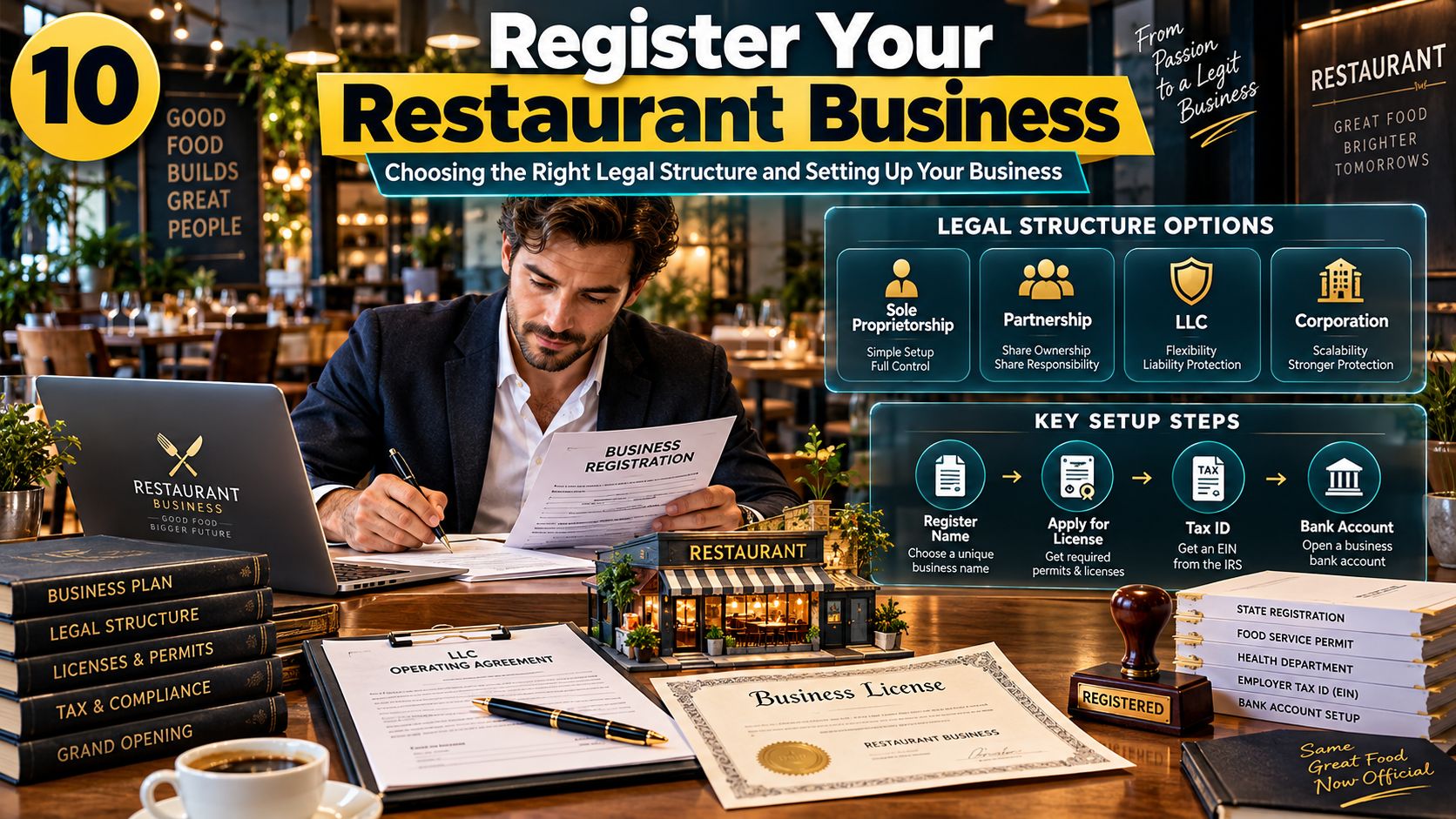
Before opening a restaurant in the USA, you need to legally establish your business. Restaurant registration is an important step because it affects your taxes, liability protection, ownership structure, and ability to work with banks, suppliers, and investors.
Many first-time restaurant owners focus on food, location, and marketing but delay the legal setup process. A properly registered restaurant creates a professional foundation and helps protect your personal assets from business-related risks.
The registration process can vary depending on your state and local regulations, but most restaurant owners need to consider:
- Choosing a business structure
- Registering the business name
- Obtaining an Employer Identification Number (EIN)
- Opening a business bank account
- Understanding tax obligations
- Meeting local requirements
A proper legal setup makes it easier to manage finances, hire employees, apply for funding, and grow your restaurant in the future.
Choose the Right Business Structure for Your Restaurant
The business structure determines how your restaurant is owned, taxed, and legally managed. Choosing the right structure depends on your goals, number of owners, risk level, and future expansion plans.
Sole Proprietorship
A sole proprietorship is the simplest business structure where one person owns and operates the restaurant.
This structure is often used by small businesses because it is easy to establish.
Advantages:
- Simple setup process
- Lower administrative requirements
- Complete ownership control
Challenges:
- Owner has personal responsibility for business debts
- Limited separation between personal and business assets
This structure may work for very small food businesses, but many restaurant owners choose structures that provide stronger liability protection.
Partnership
A partnership is a business owned by two or more individuals who share ownership responsibilities.
Partners usually define:
- Investment contributions
- Profit sharing
- Management responsibilities
- Decision-making authority
Advantages:
- Shared financial responsibility
- Combined skills and resources
Challenges:
- Potential disagreements between partners
- Liability considerations
A written partnership agreement is important to clearly define each person’s role.
Limited Liability Company (LLC)
An LLC is one of the most common structures used by small business owners in the USA because it provides liability protection while maintaining flexibility.
An LLC can help separate personal assets from business obligations.
Advantages:
- Personal liability protection
- Flexible management structure
- Suitable for many small businesses
Challenges:
- State registration requirements
- Annual compliance obligations
Many independent restaurant owners choose an LLC because it balances protection and simplicity.
Corporation
A corporation is a more formal business structure that creates a separate legal entity from its owners.
Corporations are often considered by businesses planning significant growth, investors, or multiple locations.
Advantages:
- Strong liability protection
- Easier to attract investors
- Suitable for larger businesses
Challenges:
- More complex administration
- Additional reporting requirements
The right choice depends on your restaurant’s size, growth plans, and financial strategy.
Register Your Restaurant Name
Your restaurant name is an important business asset. Before using a name, you should check whether it is available and does not conflict with existing businesses.
Consider checking:
- State business registration records
- Domain availability
- Social media usernames
- Trademark databases
A unique restaurant name helps build your brand identity and prevents legal problems in the future.
Obtain an Employer Identification Number (EIN)
An Employer Identification Number (EIN) is issued by the IRS and is commonly used for business identification purposes.
Restaurants often need an EIN for:
- Hiring employees
- Opening business bank accounts
- Filing taxes
- Working with financial institutions
Obtaining an EIN is an important step in creating a professional restaurant business structure.
Open a Business Bank Account
Keeping personal and business finances separate is essential for proper financial management.
A business bank account helps you:
- Track restaurant income
- Manage expenses
- Prepare tax records
- Build financial credibility
Using separate accounts also makes it easier to understand whether your restaurant is actually profitable.
Protect Your Restaurant Brand
As your restaurant grows, your brand becomes valuable.
Consider protecting:
- Restaurant name
- Logo
- Unique branding elements
Trademark protection can help prevent other businesses from using similar branding that may confuse customers.
Key Takeaway
Registering your restaurant business creates the legal foundation needed for long-term growth. Choosing the right business structure, obtaining necessary identification numbers, and separating business finances are essential steps before opening your doors.
A properly structured restaurant is easier to manage, finance, and expand.
Obtain Restaurant Licenses and Permits: Understanding Legal Requirements Before Opening
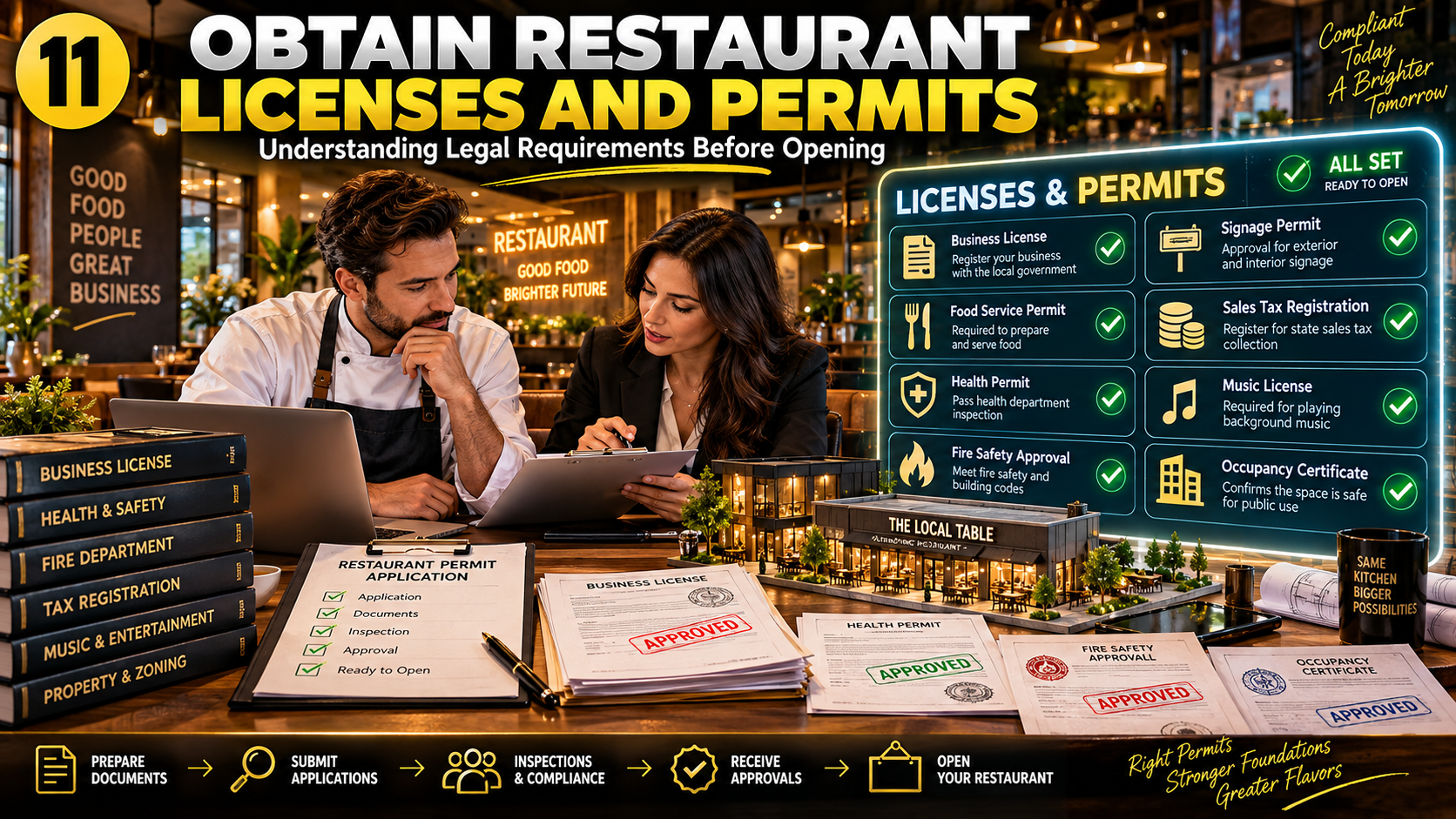
After registering your restaurant business, the next important step is obtaining the required restaurant licenses and permits. These approvals allow you to legally operate and ensure your restaurant follows health, safety, and local business regulations.
Many new restaurant owners underestimate the importance of permits and begin planning operations before understanding legal requirements. Operating without proper approvals can result in delays, fines, or even closure.
The exact requirements depend on:
- State regulations
- City or county rules
- Restaurant type
- Food activities
- Whether alcohol is served
Before opening, restaurant owners should research requirements from local government agencies and health departments.
Business License
Most restaurants need a general business license to legally operate within their city or state.
This license confirms that your business is registered and allowed to provide services in that location.
Requirements vary depending on where your restaurant operates, so owners should check local government requirements before opening.
Food Service License
A food service license allows a restaurant to prepare and sell food to customers.
This approval usually involves reviewing:
- Kitchen conditions
- Food handling procedures
- Safety practices
- Storage systems
Restaurants must maintain proper food safety standards to protect customers and meet health regulations.
Health Department Permit
Restaurants typically need approval from local health departments before opening.
Health inspections may evaluate:
- Food storage temperatures
- Kitchen cleanliness
- Employee hygiene practices
- Pest control
- Equipment sanitation
Passing health inspections is a critical step before serving customers.
Food Handler and Food Safety Training
Restaurant employees who handle food may need food safety training depending on local requirements.
Training helps employees understand:
- Safe food preparation
- Preventing contamination
- Proper storage
- Personal hygiene
Well-trained employees reduce food safety risks and improve restaurant operations.
Food Safety Compliance and HACCP
Food safety is a major responsibility for every restaurant owner. Restaurants need systems to prevent food contamination and maintain consistent safety standards.
Many food businesses use principles based on Hazard Analysis and Critical Control Points (HACCP), a preventive approach that identifies and controls potential food safety risks.
Important food safety areas include:
- Proper cooking temperatures
- Safe food storage
- Cleaning procedures
- Cross-contamination prevention
Food safety is not only a legal requirement but also an important part of customer trust.
Liquor License (If Applicable)
Restaurants that serve alcoholic beverages usually need additional approval.
Requirements vary significantly by state and local authority.
The process may involve:
- Application submission
- Background checks
- Fees
- Approval procedures
Because alcohol regulations differ widely, restaurant owners should research local requirements early.
Sign Permit and Zoning Approval
Some locations require approval for:
- Exterior signs
- Building modifications
- Restaurant use
Before selecting a location, confirm that the property allows restaurant operations under local zoning rules.
A beautiful location is not useful if it cannot legally support your restaurant concept.
Insurance Requirements
Although insurance requirements vary, many restaurants consider coverage such as:
- General liability insurance
- Property insurance
- Workers’ compensation insurance
- Business interruption coverage
Insurance helps protect the restaurant from unexpected financial losses.
Common Mistakes When Handling Licenses and Permits
Starting Operations Without Approval
Opening before receiving required permits can create serious legal problems.
Ignoring Local Requirements
Restaurant regulations differ by location. Requirements in one city may not apply in another.
Applying Too Late
Permits and inspections can take time, so they should be planned early.
Key Takeaway
Obtaining the correct licenses and permits is a necessary step when learning how to start a restaurant in the USA. Legal compliance protects your business, customers, and reputation.
Before opening day, make sure you understand:
- Required licenses
- Health approvals
- Food safety requirements
- Local regulations
- Insurance needs
A restaurant built on proper legal foundations has a stronger chance of long-term success.
Choose the Right Restaurant Location: Finding a Place That Supports Business Growth
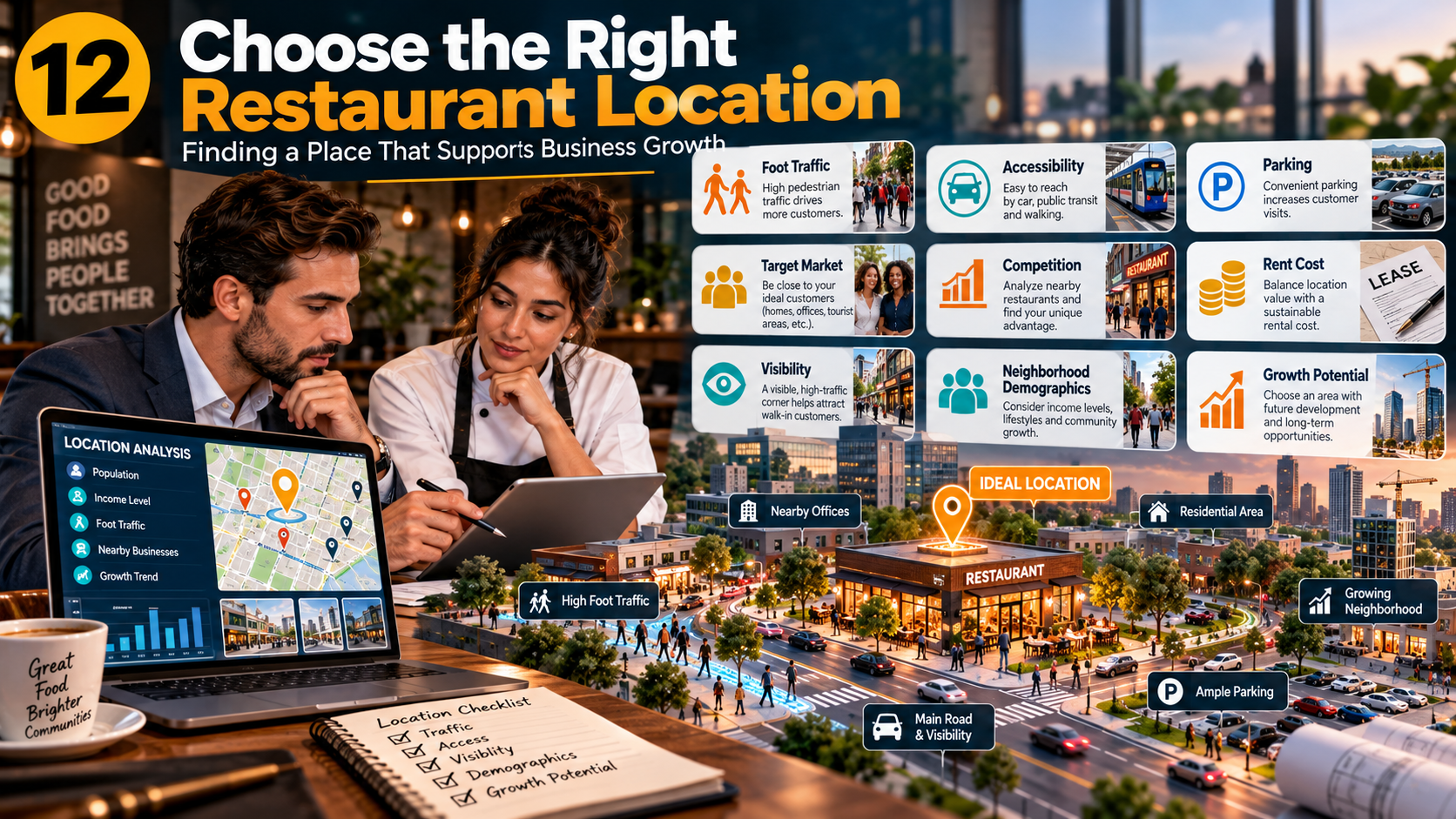
Choosing the right location is one of the most important decisions when opening a restaurant in the USA. A restaurant can have excellent food and service, but the wrong location can limit customer traffic and make it difficult to achieve profitability.
A successful restaurant location is not always the cheapest or the busiest place. It should match your restaurant concept, target customers, budget, and operating needs.
For example, a quick-service restaurant may benefit from a high-traffic area near offices or shopping centers, while a family restaurant may perform better in a residential area with convenient parking.
Before signing a lease, restaurant owners should evaluate the location from both a customer and business perspective.
Understand Your Target Customers
The first step in selecting a restaurant location is understanding where your customers spend their time.
Your location should match your target audience.
Consider:
- Age groups
- Income levels
- Lifestyle
- Work patterns
- Dining habits
For example:
A coffee shop targeting professionals may perform well near office buildings, while a family restaurant may require a neighborhood location with easy access and parking.
A good location places your restaurant closer to the people most likely to become regular customers.
Analyze Foot Traffic and Visibility
Foot traffic refers to the number of people passing through an area. High visibility can increase awareness and attract walk-in customers.
Important factors include:
- Street visibility
- Nearby businesses
- Pedestrian activity
- Accessibility from major roads
However, high traffic alone does not guarantee success. The people passing by should match your target customers.
For example, an expensive fine-dining restaurant may not benefit from a location mainly visited by customers looking for quick and affordable meals.
Evaluate Competition in the Area
Competition research helps you understand the local restaurant market.
Nearby restaurants can provide useful information about:
- Customer demand
- Pricing levels
- Popular cuisines
- Market gaps
A location with many restaurants is not always a bad choice. It may indicate that customers already visit the area for dining.
The important question is:
Can your restaurant offer something different or better?
Consider Rent and Operating Costs
Rent is one of the largest ongoing expenses for restaurants. A high-rent location may provide more visibility, but it also increases financial pressure.
Before choosing a property, consider:
- Monthly rent
- Lease terms
- Additional fees
- Utility costs
- Renovation requirements
Your location should support your expected revenue. Paying too much rent can reduce your ability to invest in food quality, staff, and marketing.
Check Accessibility and Parking
Customer convenience plays an important role in restaurant success.
Consider:
- Parking availability
- Public transportation access
- Road visibility
- Entrance convenience
- Delivery accessibility
A difficult-to-reach restaurant may lose customers even if the food quality is excellent.
Review Zoning and Property Requirements
Before finalizing a location, confirm that the property is suitable for restaurant operations.
Check:
- Zoning approval
- Building restrictions
- Kitchen requirements
- Ventilation options
- Health department requirements
A location that looks perfect may create problems if it cannot legally support your restaurant concept.
Consider Future Growth Potential
A good restaurant location should support your long-term goals.
Think about:
- Population growth
- New developments nearby
- Changing customer patterns
- Expansion opportunities
Choosing a location with future potential can help your restaurant grow into a stronger brand.
Common Mistakes When Choosing a Restaurant Location
Choosing Based Only on Low Rent
A cheap location may not attract enough customers.
Ignoring Customer Convenience
Limited parking or poor accessibility can reduce visits.
Not Researching the Area
A location decision should be based on data, not assumptions.
Signing a Lease Too Quickly
Restaurant owners should carefully review lease terms and property conditions before committing.
Key Takeaway
The right restaurant location creates the foundation for customer growth and long-term success. The best location is one that connects your restaurant concept with the customers who need your product.
Before choosing a location, analyze:
- Customer demand
- Competition
- Accessibility
- Costs
- Future growth potential
A smart location decision can become one of your restaurant’s strongest competitive advantages.
Create Your Restaurant Menu: Designing Food Offerings Customers Want
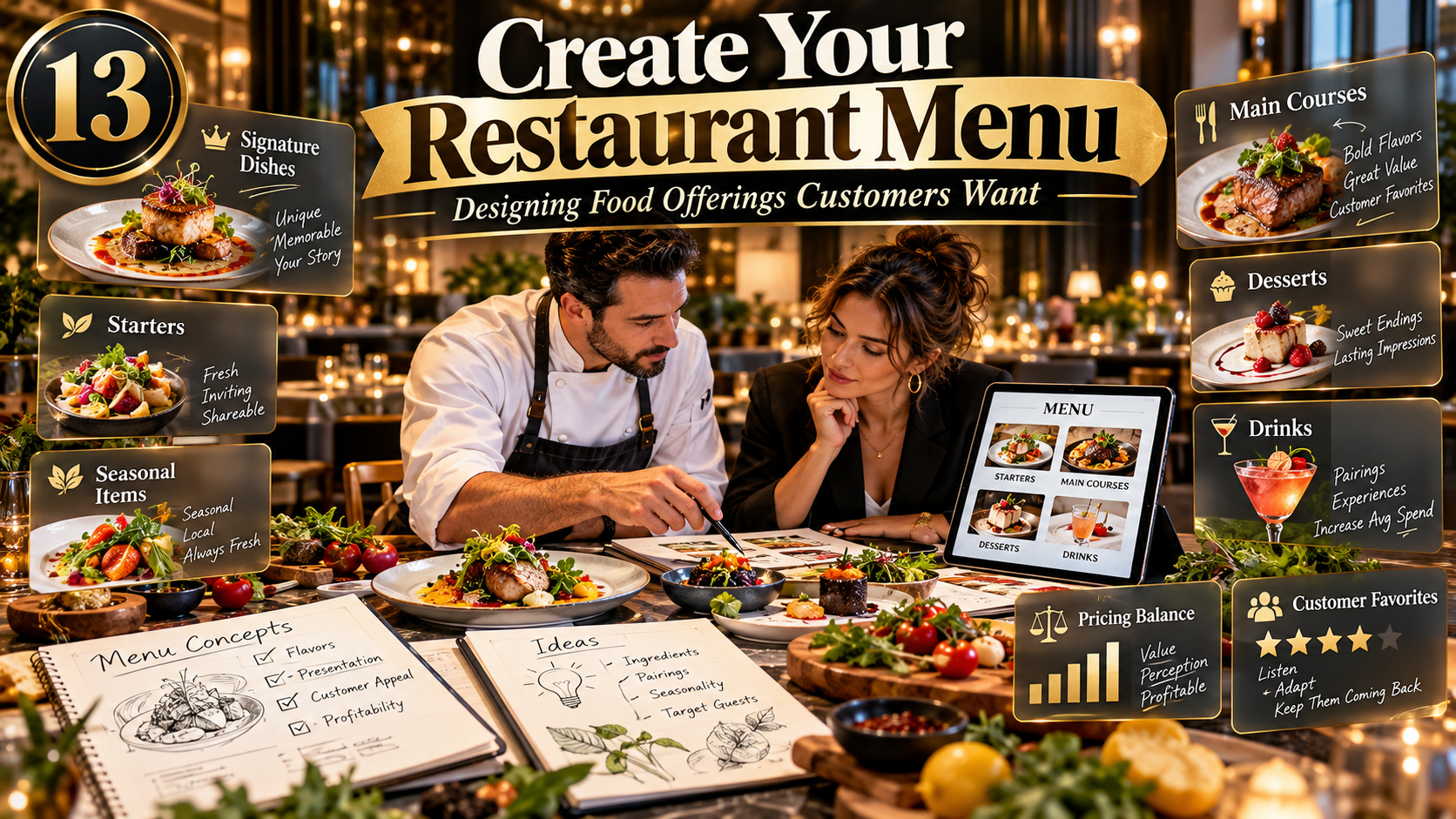
Your restaurant menu is more than a list of dishes; it is one of the most important business tools that influences customer decisions, food costs, operations, and profitability.
A successful menu connects your restaurant concept with customer expectations. It should represent your brand, highlight your strengths, and help customers choose dishes that provide value while maintaining healthy profit margins.
Many new restaurant owners make the mistake of creating menus based only on what they personally like. A profitable menu requires understanding customer preferences, ingredient costs, kitchen capabilities, and pricing strategy.
A well-designed restaurant menu should answer:
- What does your restaurant specialize in?
- What dishes will customers remember?
- Which items generate profit?
- Can your kitchen prepare these items consistently?
Design Your Menu Around Your Restaurant Concept
Your menu should match your restaurant identity.
For example:
A fast-casual restaurant may need:
- Simple choices
- Quick preparation
- Easy ordering
A fine-dining restaurant may focus on:
- Premium dishes
- Seasonal ingredients
- Unique presentation
A restaurant menu should create consistency between:
- Food
- Pricing
- Service style
- Customer expectations
Research Customer Preferences
Before finalizing your menu, understand what your target customers want.
Research:
- Popular dishes
- Local food trends
- Competitor menus
- Customer reviews
For example, if customers in your area prefer healthier options, adding salads, fresh ingredients, or lighter meals may create additional demand.
Customer research helps avoid creating a menu that does not match the market.
Keep Your Menu Focused
Many new restaurant owners create menus with too many items. While variety may seem attractive, large menus can create operational challenges.
A smaller, focused menu can help with:
- Faster preparation
- Better quality control
- Lower food waste
- Easier inventory management
Successful restaurants often focus on fewer items that they can prepare exceptionally well.
Calculate Food Costs and Pricing
Menu pricing should consider both customer expectations and business profitability.
Important factors include:
- Ingredient costs
- Portion size
- Labor requirements
- Competitor pricing
- Target profit margins
For example, a dish using expensive ingredients may require a higher price to remain profitable.
Proper menu pricing helps restaurants cover expenses while providing value to customers.
Create Signature Dishes
Signature dishes help customers remember your restaurant.
A signature item can be:
- A unique recipe
- A specialty drink
- A regional dish
- A creative version of a popular meal
These items can become part of your restaurant branding and marketing strategy.
Consider Menu Design and Presentation
The physical and digital appearance of your menu affects customer decisions.
Good menu design includes:
- Clear categories
- Easy-to-read descriptions
- Attractive food images where appropriate
- Logical pricing placement
Your menu should guide customers toward popular and profitable items without making the ordering process confusing.
Include Digital Menu Options
Modern restaurants increasingly use digital ordering systems.
Consider:
- Website menu
- QR code menus
- Online ordering platforms
- Delivery app menus
Digital menus should be updated regularly to reflect:
- Price changes
- New dishes
- Seasonal offerings
Common Menu Planning Mistakes
Too Many Menu Items
Large menus increase complexity and food waste.
Ignoring Food Costs
Popular dishes are not always profitable.
Poor Menu Descriptions
Customers need clear information to understand the value of each item.
Not Updating the Menu
Customer preferences and costs change over time.
Key Takeaway
A successful restaurant menu balances customer demand, operational efficiency, and profitability. Your menu should not only showcase your food but also support your overall restaurant business strategy.
A well-planned menu helps you:
- Control costs
- Improve customer satisfaction
- Build your brand
- Increase profitability
The next step after menu planning is creating an efficient physical environment where your team can deliver that experience.
Design an Efficient Restaurant Layout: Creating a Space That Supports Customers and Operations
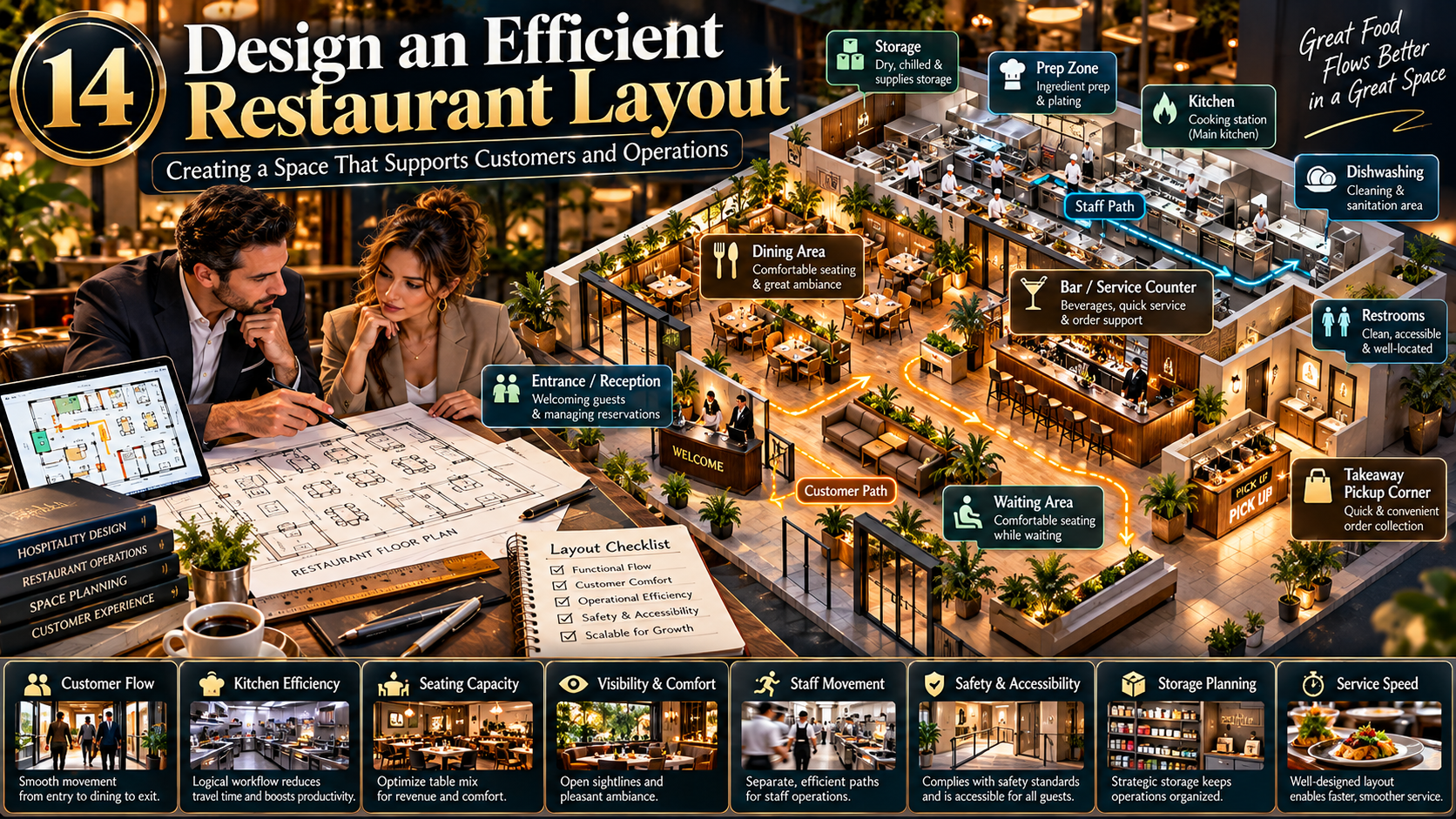
A restaurant layout is more than arranging tables and decorating the dining area. It is a strategic design decision that affects customer experience, employee productivity, food safety, and overall restaurant efficiency.
A poorly designed restaurant can create problems such as slow service, crowded areas, employee confusion, and uncomfortable customer experiences. On the other hand, an efficient layout allows staff to work smoothly while creating a comfortable environment for guests.
When designing a restaurant layout, you need to balance two important goals:
- Creating an enjoyable customer experience
- Making daily operations easier for employees
A successful restaurant layout connects the kitchen, dining area, storage, and service points in a way that supports smooth movement.
Understand the Main Areas of a Restaurant Layout
Most restaurants are divided into different operational zones. Each area has a specific purpose and should work together as one system.
The main areas include:
- Kitchen area
- Dining area
- Customer service area
- Storage area
- Restrooms
- Employee spaces
The size and design of each area depend on your restaurant concept, service style, and available space.
For example, a fast-casual restaurant may require more counter and pickup space, while a full-service restaurant may need a larger dining area with comfortable seating.
Design an Efficient Kitchen Layout
The kitchen is the operational center of your restaurant. A well-designed kitchen helps employees prepare food faster, reduce mistakes, and maintain safety standards.
Important kitchen areas include:
Food Preparation Area
This area should have enough space for:
- Cutting ingredients
- Preparing dishes
- Organizing cooking processes
Proper preparation space improves efficiency and reduces delays during busy hours.
Cooking Area
The cooking area should be arranged according to the restaurant menu.
Equipment placement should allow employees to move easily between:
- Preparation stations
- Cooking equipment
- Serving areas
A logical workflow reduces unnecessary movement and improves service speed.
Storage and Refrigeration Area
Proper storage planning is essential for food quality and cost control.
Storage areas should support:
- Ingredient organization
- Easy inventory management
- Food safety requirements
Restaurants should separate different storage categories, such as dry goods, refrigerated items, and cleaning supplies.
Create a Customer-Friendly Dining Area
The dining area represents your restaurant experience. Customers should feel comfortable from the moment they enter.
Important considerations include:
- Table arrangement
- Walking space
- Lighting
- Noise control
- Customer privacy
The layout should avoid overcrowding while allowing enough seating capacity.
A restaurant should maximize space without making customers feel uncomfortable.
Plan Customer Flow
Customer movement affects the overall dining experience.
A good layout should make it easy for customers to:
- Enter the restaurant
- View the menu
- Place orders
- Find seating
- Receive food
- Exit smoothly
For example, a fast-service restaurant needs an efficient ordering and pickup flow, while a full-service restaurant needs clear paths for servers and guests.
Consider Employee Workflow
Restaurant employees spend many hours moving between different areas. A good layout reduces unnecessary movement and improves productivity.
Consider:
- Distance between kitchen and dining area
- Placement of service stations
- Accessibility of supplies
- Employee safety
An efficient employee workflow can improve service speed and reduce operational stress.
Include Safety and Accessibility Requirements
Restaurant layouts should consider safety regulations and accessibility standards.
Important areas include:
- Emergency exits
- Proper ventilation
- Safe walking paths
- Accessible entrances
- Restroom accessibility
Following safety requirements protects customers, employees, and the business.
Use Technology in Restaurant Layout Planning
Modern restaurants often include technology as part of their design.
Examples include:
- POS stations
- Self-order kiosks
- Digital menu boards
- Online pickup areas
- Delivery pickup zones
Technology should improve customer convenience without creating unnecessary complexity.
Common Restaurant Layout Mistakes
Prioritizing Appearance Over Function
A beautiful restaurant can still fail if employees cannot operate efficiently.
Too Much Seating
More tables do not always mean more profit if service quality decreases.
Poor Kitchen Planning
A small or inefficient kitchen can slow down the entire restaurant.
Ignoring Future Growth
The layout should allow improvements or expansion as the business grows.
Key Takeaway
A successful restaurant layout combines design, functionality, and customer experience. The goal is to create a space where customers feel comfortable and employees can work efficiently.
Before finalizing your restaurant design, evaluate:
- Customer movement
- Kitchen workflow
- Employee efficiency
- Safety requirements
- Future expansion possibilities
An efficient layout creates the foundation for smooth restaurant operations and better customer satisfaction.
Order Restaurant Equipment: Essential Tools for Running Your Restaurant
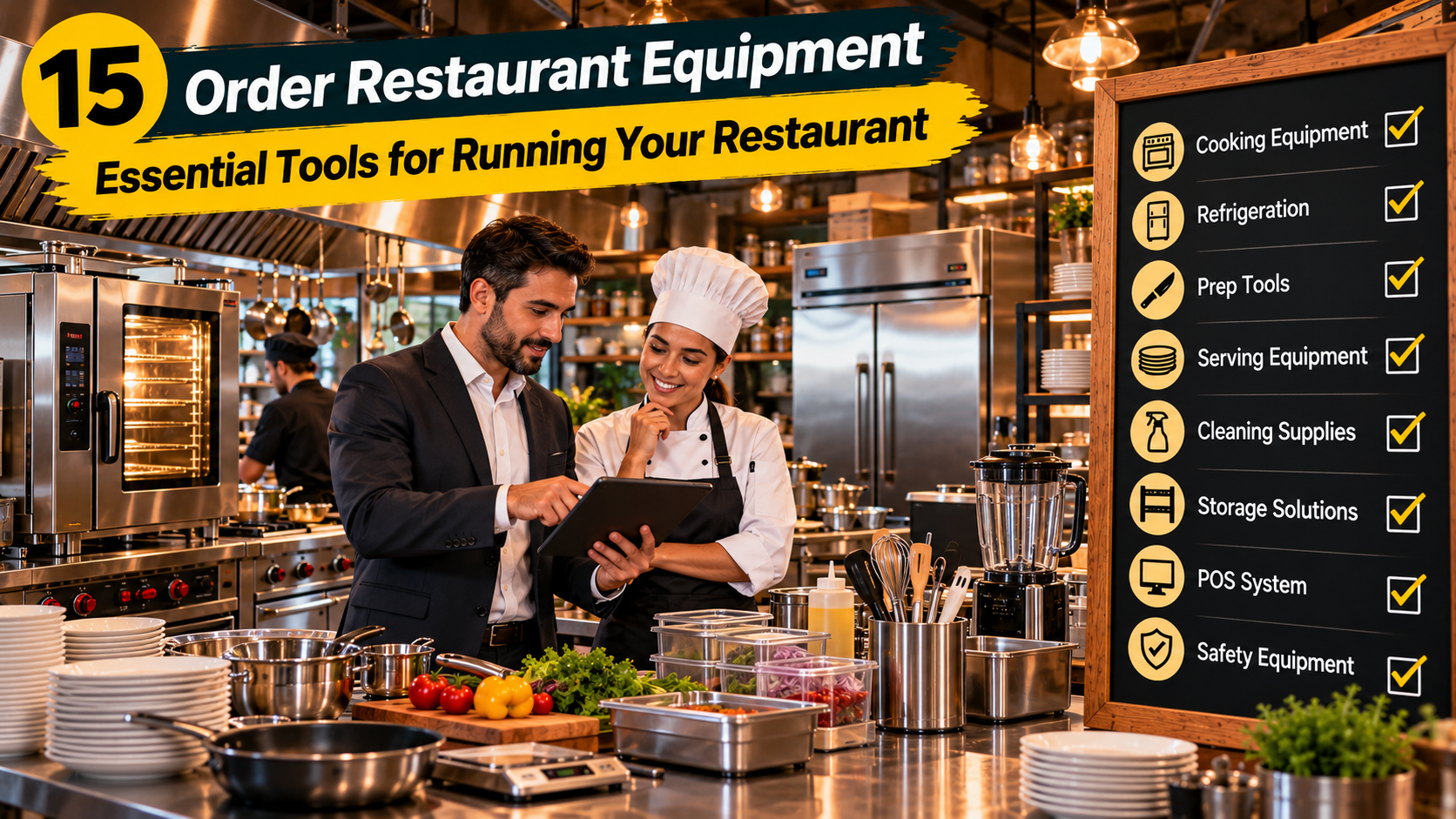
Restaurant equipment is one of the biggest investments when opening a restaurant. The right equipment allows your team to prepare food efficiently, maintain quality standards, and provide consistent service.
Choosing equipment should not be based only on price. Restaurant owners need to consider their menu, kitchen size, expected customer volume, energy efficiency, maintenance requirements, and long-term operating costs.
A burger restaurant, bakery, coffee shop, and fine-dining restaurant will all require different equipment because their preparation methods and service models are different.
A proper restaurant equipment checklist helps owners avoid missing essential items and prevents unnecessary spending.
Understand Your Restaurant Equipment Needs
Before purchasing equipment, analyze:
- Your menu items
- Kitchen design
- Expected sales volume
- Available space
- Budget
For example, a restaurant with a large fried-food menu will require different cooking equipment compared to a fresh salad or bakery concept.
The equipment should support your business model, not create unnecessary costs.
Essential Kitchen Equipment
Cooking Equipment
Cooking equipment forms the foundation of restaurant operations.
Common items include:
- Commercial ovens
- Grills
- Fryers
- Stoves
- Cooking ranges
The type of cooking equipment depends on your cuisine and menu requirements.
For example, a pizza restaurant may prioritize ovens, while a barbecue restaurant may require specialized smokers.
Refrigeration Equipment
Proper refrigeration is essential for maintaining food quality and safety.
Common refrigeration equipment includes:
- Walk-in refrigerators
- Freezers
- Reach-in refrigerators
- Beverage coolers
Efficient refrigeration helps reduce food waste and supports proper inventory management.
Food Preparation Equipment
Preparation equipment helps employees work faster and maintain consistency.
Examples include:
- Food processors
- Mixers
- Cutting equipment
- Preparation tables
- Storage containers
Good preparation systems improve kitchen workflow during busy periods.
Front-of-House Equipment
The customer-facing area also requires important equipment.
Examples include:
- Tables and chairs
- POS systems
- Payment terminals
- Menu displays
- Service stations
The front-of-house setup should support both customer comfort and efficient service.
Restaurant Technology Systems
Technology has become an important part of modern restaurant operations.
Common systems include:
POS System
A restaurant POS system helps manage:
- Orders
- Payments
- Sales reports
- Inventory tracking
It improves accuracy and provides valuable business information.
Online Ordering System
Many customers prefer digital ordering options.
Restaurants may use:
- Website ordering
- Mobile apps
- Delivery platforms
Online ordering can increase sales opportunities and improve customer convenience.
Buy, Lease, or Rent Restaurant Equipment?
Restaurant owners have different options when acquiring equipment.
Buying Equipment
Advantages:
- Long-term ownership
- No recurring rental costs
Challenges:
- Higher upfront investment
Leasing Equipment
Advantages:
- Lower initial cost
- Easier cash-flow management
Challenges:
- Long-term payments
- Equipment ownership limitations
The best choice depends on your budget, restaurant size, and financial strategy.
Consider Energy Efficiency and Maintenance
Equipment costs continue after purchase. Energy consumption and maintenance affect long-term expenses.
Consider:
- Energy-efficient appliances
- Warranty coverage
- Repair availability
- Cleaning requirements
Reliable equipment reduces downtime and helps maintain consistent operations.
Common Equipment Purchasing Mistakes
Buying Too Much Equipment
Unused equipment wastes money and valuable kitchen space.
Choosing Only the Cheapest Option
Low-quality equipment may create higher repair costs later.
Ignoring Kitchen Space
Equipment should fit your layout and allow employees to move safely.
Forgetting Maintenance Costs
Equipment requires regular cleaning and servicing.
Key Takeaway
Choosing the right restaurant equipment is essential for efficient operations, food quality, and cost control.
Before purchasing, evaluate:
- Your menu requirements
- Kitchen capacity
- Budget
- Equipment quality
- Long-term maintenance
The right equipment investment helps your restaurant operate smoothly and deliver consistent customer experiences.
Hire the Right Restaurant Staff: Building a Team That Supports Your Business
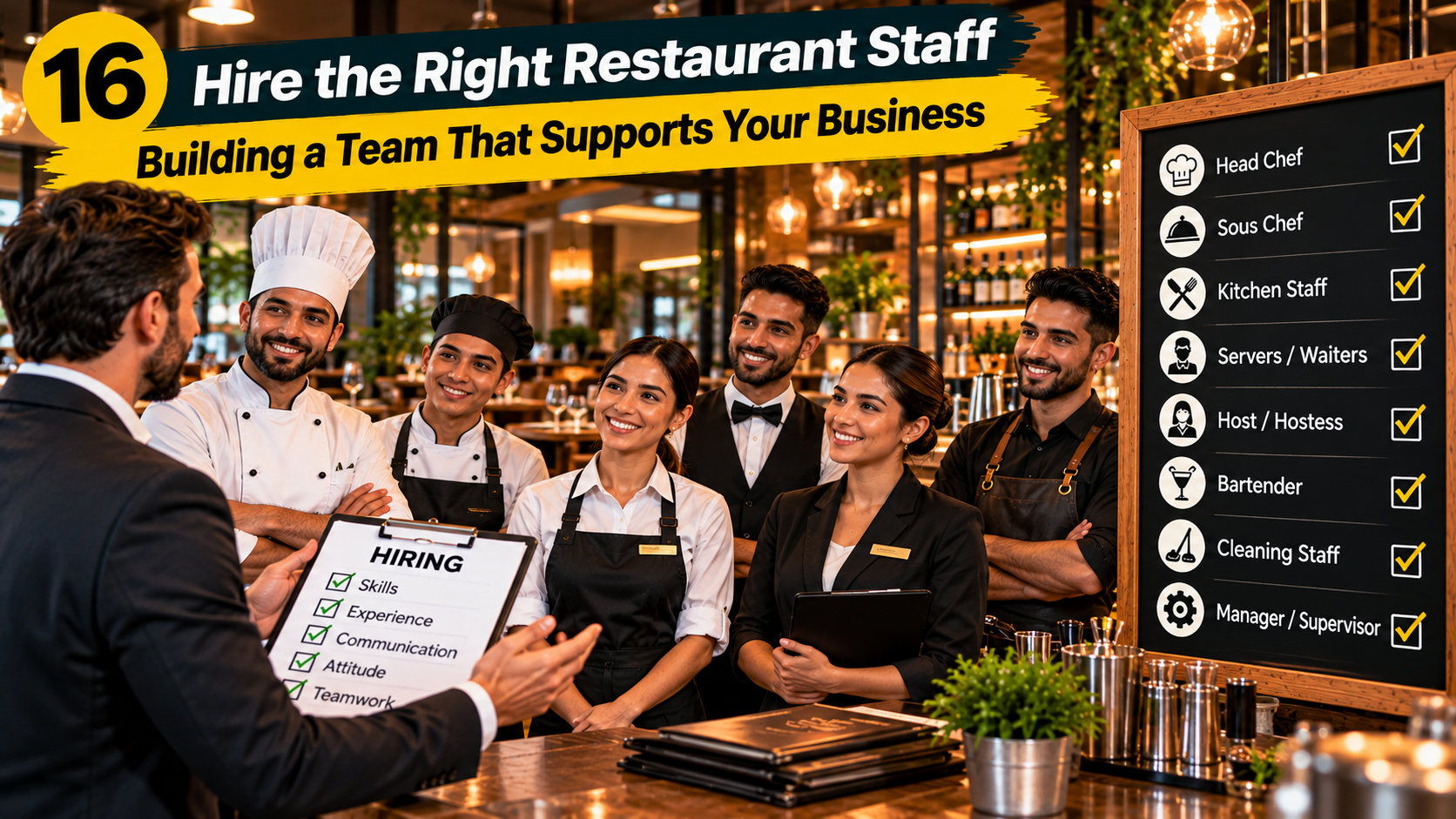
Employees are one of the most important parts of any restaurant business. A restaurant can have an excellent menu and attractive location, but poor service can quickly damage customer satisfaction and reputation.
Hiring the right restaurant staff is not only about filling positions. It is about building a team that can consistently deliver quality food, professional service, and a positive customer experience.
The staffing requirements of a restaurant depend on factors such as:
- Restaurant size
- Service style
- Operating hours
- Menu complexity
- Customer volume
For example, a small café may operate with a limited team, while a full-service restaurant may require managers, chefs, servers, hosts, and support staff.
A strong hiring strategy helps control labor costs while maintaining service quality.
Understand Different Restaurant Roles
Before hiring employees, define the roles your restaurant needs. Clear responsibilities help avoid confusion and improve daily operations.
Restaurant Manager
A restaurant manager oversees the overall operation of the business.
Responsibilities may include:
- Managing employees
- Monitoring customer service
- Controlling expenses
- Handling schedules
- Ensuring operational standards
A skilled manager can improve efficiency and help maintain consistency.
Chef and Kitchen Staff
The kitchen team is responsible for food preparation and quality control.
Common positions include:
- Executive chef
- Sous chef
- Line cooks
- Prep cooks
- Dishwashers
Kitchen staff must understand:
- Food preparation standards
- Safety procedures
- Portion control
- Cleanliness requirements
Servers and Front-of-House Staff
Front-of-house employees directly interact with customers.
Responsibilities include:
- Taking orders
- Answering questions
- Providing customer service
- Handling payments
Friendly and professional service can significantly influence customer loyalty.
Create a Strong Hiring Process
A structured hiring process helps restaurants find reliable employees.
Important steps include:
Define Job Requirements
Before advertising a position, clearly identify:
- Required skills
- Experience level
- Responsibilities
- Working hours
Clear job descriptions attract better candidates.
Conduct Effective Interviews
Restaurant interviews should evaluate both technical skills and customer service ability.
Consider asking:
- Previous restaurant experience
- Ability to handle busy situations
- Teamwork experience
- Availability
Provide Proper Training
Training is essential even for experienced employees because every restaurant has different standards.
Training should cover:
- Menu knowledge
- Customer service
- Food safety
- Restaurant procedures
- Workplace expectations
A trained team creates a more consistent customer experience.
Manage Restaurant Labor Costs
Labor is one of the largest ongoing expenses in a restaurant business.
Effective labor management includes:
- Creating efficient schedules
- Matching staff levels with customer demand
- Reducing unnecessary overtime
- Improving employee productivity
The goal is not simply reducing labor costs. The goal is finding the right balance between cost control and service quality.
Build a Positive Restaurant Culture
A strong workplace culture helps attract and retain employees.
Important factors include:
- Respectful management
- Clear communication
- Recognition of good performance
- Opportunities for growth
High employee turnover can increase training costs and affect customer experience.
Common Staffing Mistakes
Hiring Too Quickly
Filling positions without proper evaluation can create service problems.
Ignoring Training
Employees need guidance to understand your restaurant standards.
Understaffing During Busy Hours
Too few employees can lead to slow service and unhappy customers.
Poor Communication
Employees perform better when expectations are clear.
Key Takeaway
Building the right restaurant team is essential for long-term success. Employees represent your brand every day, from preparing food to interacting with customers.
A successful staffing strategy focuses on:
- Hiring the right people
- Providing proper training
- Managing labor efficiently
- Creating a positive workplace
A strong team helps transform a restaurant concept into a reliable and memorable customer experience.
Create Restaurant SOPs: Managing Daily Operations and Quality Standards
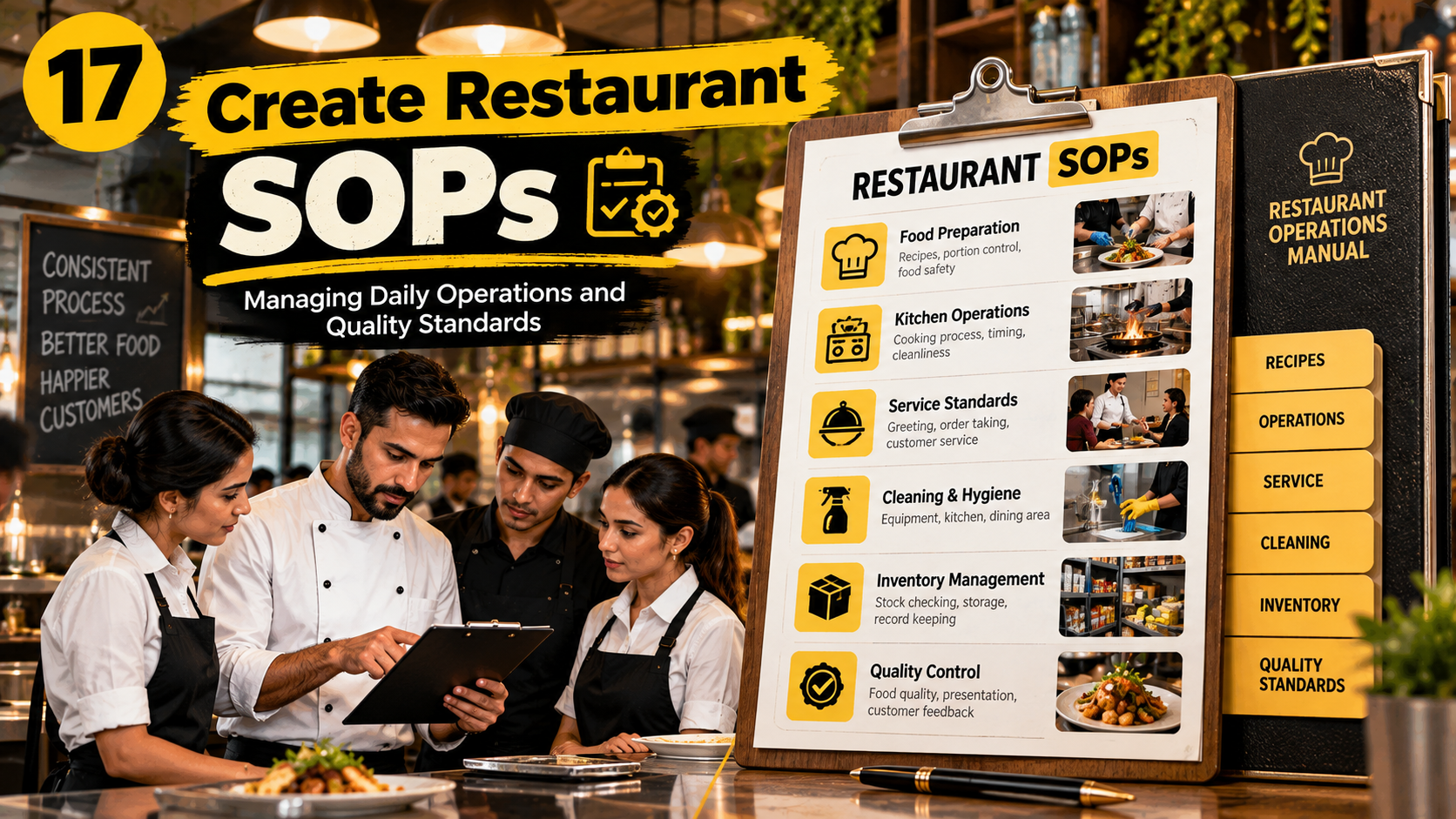
Standard Operating Procedures (SOPs) are written instructions that explain how different tasks should be performed in a restaurant. They help maintain consistency, improve efficiency, and ensure employees follow the same standards every day.
Many restaurants struggle because operations depend too much on individual employees. When procedures are not documented, food quality, customer service, and safety standards can vary.
Restaurant SOPs create a system that allows your business to operate smoothly even as your team grows.
Why Restaurant SOPs Are Important?
A restaurant has many daily activities that require consistency, including:
- Food preparation
- Cleaning
- Inventory management
- Customer service
- Opening and closing procedures
SOPs help employees understand exactly what is expected.
Benefits include:
- Better quality control
- Easier employee training
- Improved food safety
- Reduced mistakes
- More efficient operations
Essential Restaurant SOP Categories
Food Preparation SOPs
Food preparation procedures ensure that meals are prepared consistently.
They may include:
- Ingredient measurements
- Cooking methods
- Portion sizes
- Presentation standards
Consistency is important because customers expect the same quality every time they visit.
Food Safety SOPs
Food safety procedures help prevent contamination and protect customers.
Important areas include:
- Proper food storage
- Temperature monitoring
- Cleaning procedures
- Personal hygiene
- Cross-contamination prevention
Food safety is not only a legal requirement but also an important part of building customer trust.
Cleaning and Sanitation SOPs
Cleanliness directly affects customer perception.
Cleaning procedures should define:
- Cleaning schedules
- Equipment maintenance
- Restroom checks
- Waste management
A clean restaurant creates a safer and more positive customer experience.
Inventory Management SOPs
Poor inventory management can increase food waste and reduce profitability.
Inventory procedures should cover:
- Receiving supplies
- Storage organization
- Stock counting
- Waste tracking
- Supplier management
Proper inventory control helps restaurants reduce unnecessary costs.
Opening and Closing Procedures
Daily opening and closing checklists help employees complete important tasks consistently.
Opening procedures may include:
- Preparing stations
- Checking equipment
- Reviewing supplies
Closing procedures may include:
- Cleaning
- Equipment shutdown
- Inventory checks
- Security checks
Restaurant Technology and SOP Management
Modern restaurants often use digital tools to manage procedures and operations.
Examples include:
- Inventory software
- Employee scheduling systems
- POS reports
- Digital training platforms
Technology can make SOP management easier and improve operational visibility.
Common SOP Mistakes
Creating Complicated Procedures
SOPs should be clear and easy for employees to follow.
Not Updating Procedures
Restaurant operations change over time, so SOPs should be reviewed regularly.
Creating Documents Nobody Uses
SOPs should become part of daily operations, not just paperwork.
Key Takeaway
Restaurant SOPs create consistency and professionalism. They help employees understand expectations, maintain quality, and operate efficiently.
A well-managed restaurant is not built only on good food; it is built on strong systems that allow quality and service to continue every day.
Promote Your Restaurant Launch: Building Awareness Before Opening Day
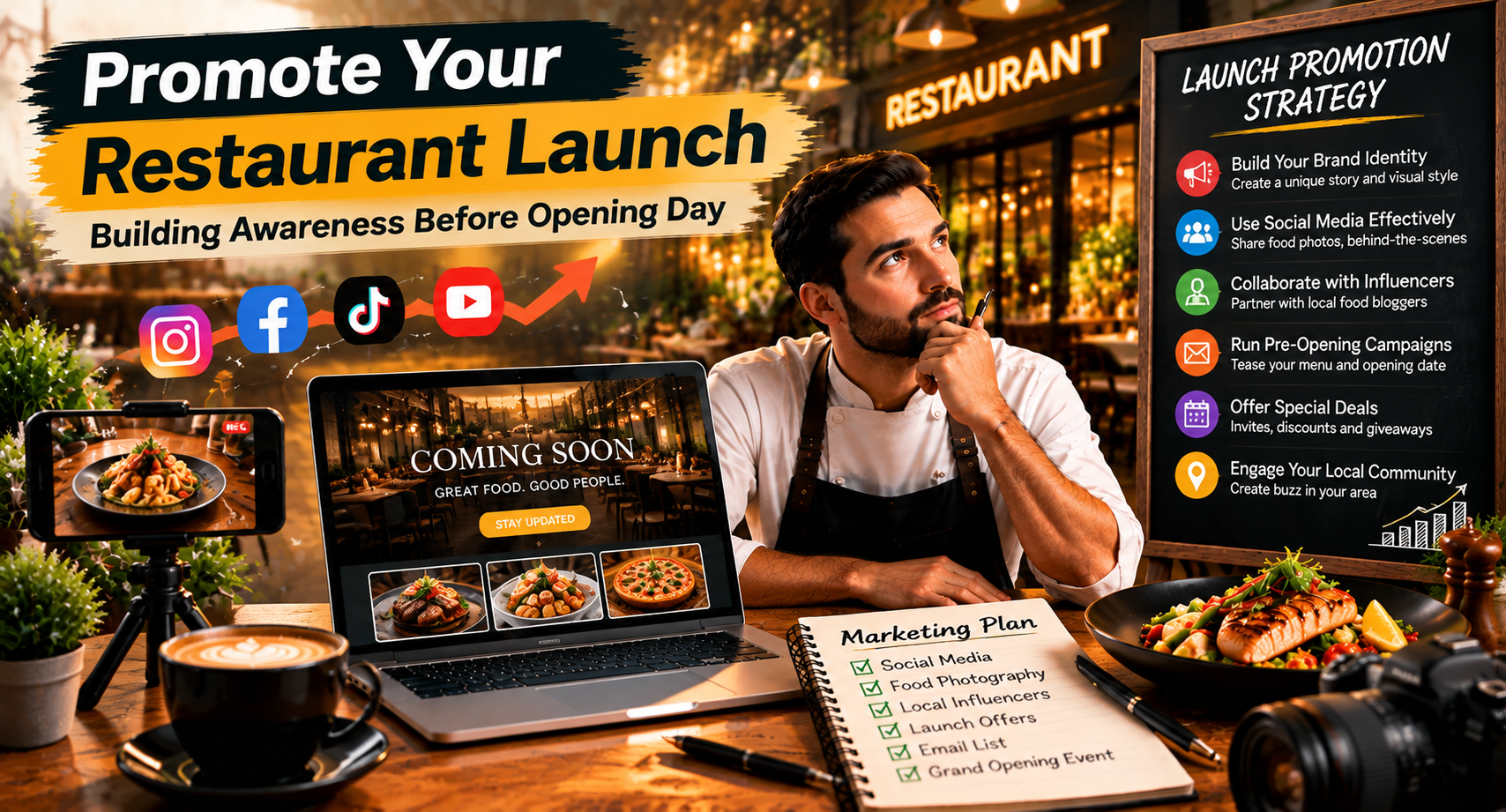
Opening a restaurant is not only about preparing food and setting up the space. A successful launch requires creating awareness before customers arrive. Many new restaurant owners wait until opening day to start marketing, but effective restaurant marketing begins weeks or months before the doors open.
A strong launch strategy helps customers discover your restaurant, builds excitement, and creates an initial customer base.
Your restaurant launch should focus on three stages:
- Before opening
- Opening period
- After launch
Each stage plays an important role in building long-term customer relationships.
Start Marketing Before Your Restaurant Opens
Pre-launch marketing allows potential customers to learn about your restaurant before the first day of business.
Before opening, you can:
- Create social media accounts
- Share behind-the-scenes updates
- Introduce your menu
- Announce opening dates
- Build an email list
For example, sharing kitchen preparation, interior design progress, or menu testing can create curiosity and encourage people to follow your journey.
Build Your Restaurant Online Presence
Modern customers often search online before visiting a restaurant. A professional digital presence helps customers find important information and builds trust.
Essential online platforms include:
Restaurant Website
Your website should include:
- Restaurant information
- Menu
- Location
- Opening hours
- Contact details
- Reservation or ordering options
A website also helps improve visibility through search engines.
Google Business Profile
Google Business Profile is essential for local restaurant visibility.
It allows customers to find:
- Address
- Phone number
- Opening hours
- Photos
- Reviews
- Directions
Optimizing your Google Business Profile is an important part of local SEO for restaurants.
Social Media Marketing
Platforms such as Instagram, Facebook, and TikTok are valuable for restaurants because food is highly visual.
Content ideas include:
- Food photos
- Chef stories
- Customer experiences
- New menu announcements
- Restaurant events
Consistent content helps build brand recognition.
Create an Opening Campaign
Your opening should create excitement and encourage people to visit.
Possible strategies include:
- Grand opening events
- Limited-time offers
- Free samples
- Community partnerships
- Influencer visits
The goal is not only attracting customers on opening day but encouraging repeat visits.
Encourage Customer Reviews
Online reviews strongly influence restaurant decisions.
Encourage satisfied customers to share feedback on platforms such as:
- Yelp
- Restaurant directories
Positive reviews improve credibility and help new customers trust your restaurant.
However, reviews should be earned through excellent food and service, not manipulation.
Use Local Marketing Strategies
Restaurants depend heavily on local customers.
Useful local marketing methods include:
- Community events
- Local partnerships
- Neighborhood promotions
- Catering opportunities
- Local business collaborations
Building relationships within your community can create loyal customers.
Common Restaurant Launch Mistakes
Marketing Too Late
Waiting until opening day reduces awareness.
Ignoring Online Presence
Customers expect restaurants to have accurate digital information.
Focusing Only on Discounts
Discounts may attract customers temporarily, but long-term success requires quality and customer experience.
Key Takeaway
A successful restaurant launch begins before opening day. Effective marketing creates awareness, builds trust, and helps attract your first customers.
A strong launch strategy combines:
- Digital marketing
- Local promotion
- Customer engagement
- Consistent branding
The goal is not simply to open a restaurant, but to start building a recognizable restaurant brand.
Restaurant Success Factors: What Makes Restaurants Profitable and Sustainable
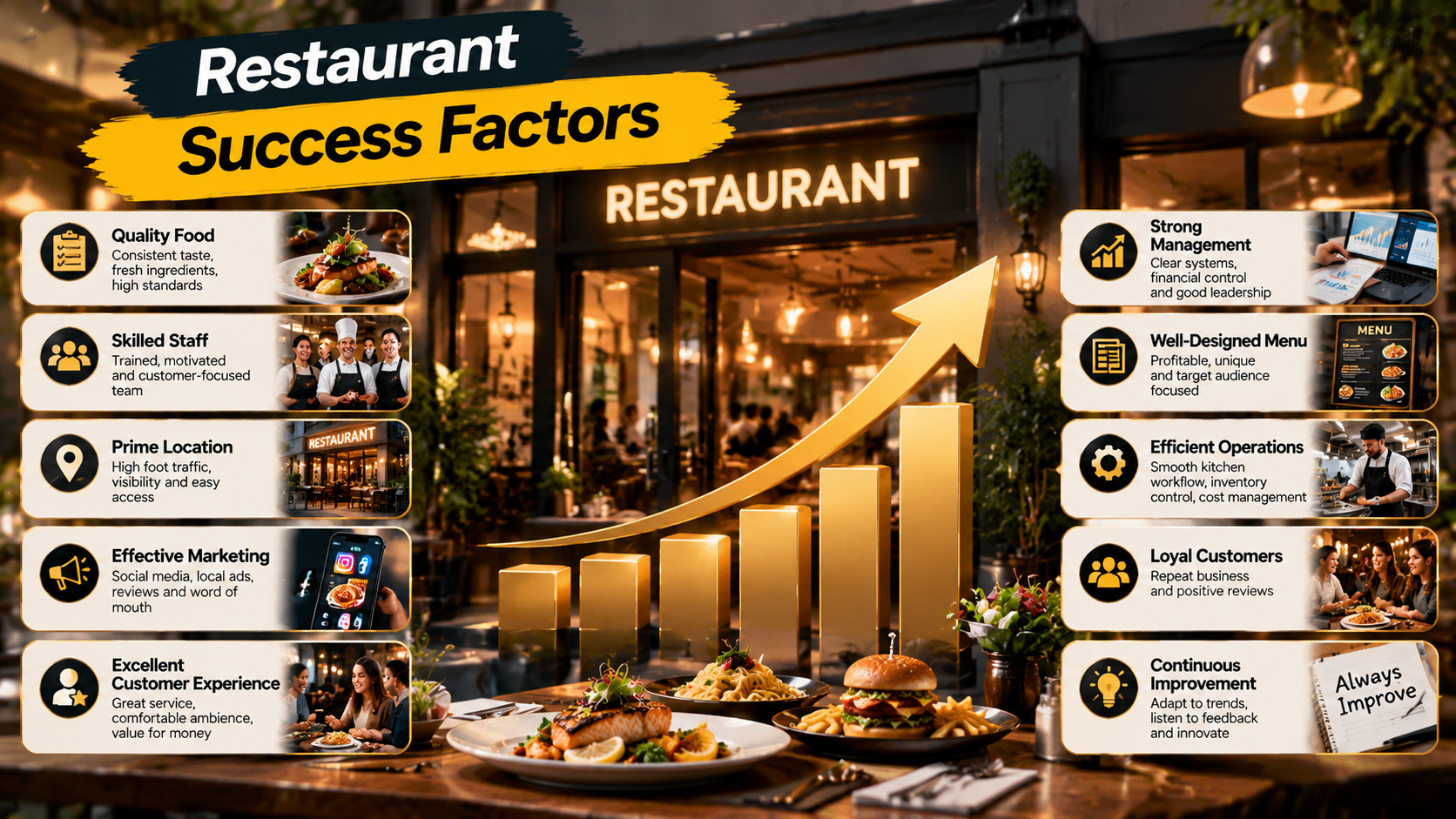
Opening a restaurant is only the beginning. Long-term success depends on how effectively you manage operations, customer relationships, finances, and continuous improvement.
Many restaurants fail not because they lack customers, but because they struggle with cost control, inconsistent quality, poor management, or weak planning.
A successful restaurant creates a balance between:
- Customer satisfaction
- Operational efficiency
- Financial discipline
Consistent Food Quality
Food quality is one of the strongest factors influencing customer loyalty.
Customers expect:
- Consistent taste
- Proper presentation
- Fresh ingredients
- Reliable portion sizes
A restaurant should create systems that ensure every customer receives a similar experience.
This is why recipes, preparation procedures, and quality checks are important.
Strong Cost Management
Profitability depends on controlling expenses while maintaining quality.
Important areas include:
- Food costs
- Labor costs
- Inventory waste
- Supplier pricing
- Energy expenses
Successful restaurant owners regularly review financial performance and adjust strategies when needed.
Customer Experience
Customers remember more than food. They remember the complete experience.
Important factors include:
- Friendly service
- Clean environment
- Comfortable atmosphere
- Fast response
- Easy ordering process
A positive experience increases repeat visits and recommendations.
Effective Menu Management
A profitable menu requires continuous improvement.
Restaurant owners should analyze:
- Popular dishes
- Low-performing items
- Food costs
- Customer feedback
Menu engineering helps identify which items generate the most value for the business.
Employee Management
A strong team is essential for restaurant success.
Successful restaurants invest in:
- Training
- Communication
- Employee development
- Clear expectations
Employees who understand the restaurant’s standards provide better customer service.
Adaptability and Improvement
The restaurant industry changes constantly.
Successful restaurants adapt to:
- Customer preferences
- Technology
- Market conditions
- Competition
Examples include:
- Adding online ordering
- Improving delivery systems
- Updating menus
- Using customer feedback
Businesses that continue improving are more likely to remain competitive.
Key Takeaway
A profitable restaurant is built through consistent execution, not only a good idea.
The strongest restaurants focus on:
- Quality food
- Efficient operations
- Customer satisfaction
- Financial control
- Continuous improvement
Tips From Restaurant Owners: Practical Lessons for Building a Successful Restaurant
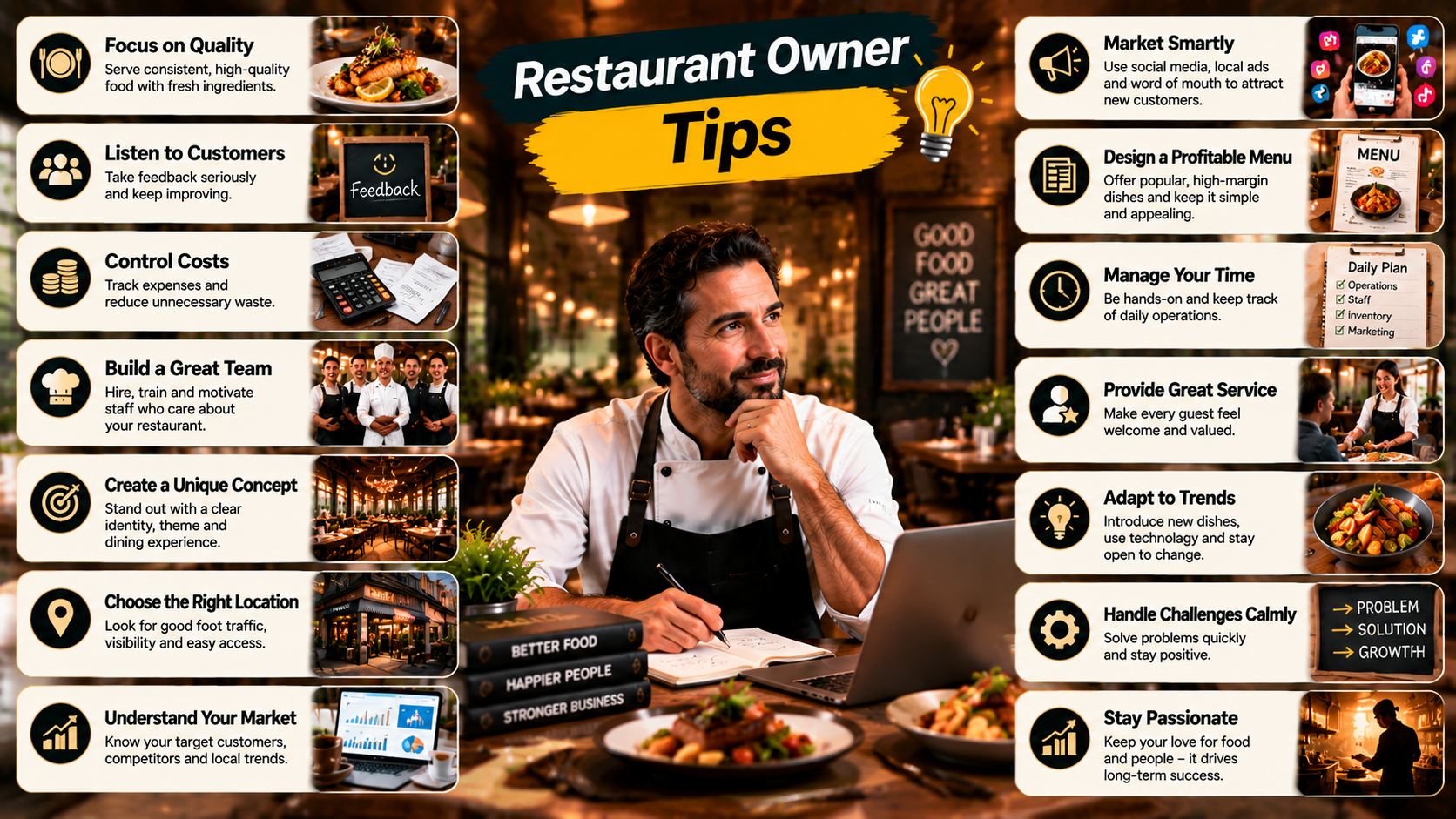
Starting a restaurant can be exciting, but experienced restaurant owners understand that success depends on preparation, discipline, and continuous improvement. Many first-time entrepreneurs focus on the creative side of restaurants, such as food and design, but overlook the operational challenges that determine long-term success.
Learning from experienced restaurant owners can help beginners avoid common mistakes and make smarter decisions.
The following principles are commonly followed by successful restaurant operators:
1. Understand Your Numbers Before Opening
One of the most important lessons from experienced restaurant owners is understanding the financial side of the business.
A restaurant owner should know:
- Startup costs
- Monthly expenses
- Food costs
- Labor costs
- Average customer spending
- Break-even point
Many restaurants struggle because owners focus on sales but ignore profitability.
Strong financial management allows owners to make better decisions about pricing, staffing, inventory, and expansion.
2. Start With a Clear and Focused Concept
Successful restaurants usually have a clear identity. They know what they offer and who they serve.
A focused concept helps with:
- Menu development
- Marketing
- Customer targeting
- Brand recognition
For example, a restaurant specializing in authentic regional cuisine may create a stronger identity than a restaurant trying to serve every possible type of food.
A clear concept makes it easier for customers to understand why they should visit.
3. Control Food Costs Carefully
Food is one of the largest restaurant expenses, making cost control essential.
Experienced owners regularly monitor:
- Ingredient prices
- Portion sizes
- Food waste
- Supplier performance
Small problems in food management can significantly affect profits over time.
Successful restaurants create systems to maintain quality while reducing unnecessary waste.
4. Focus on Customer Experience
Many restaurant owners discover that customers return not only because of food but because of the overall experience.
Important factors include:
- Friendly service
- Clean environment
- Consistent quality
- Fast response
- Comfortable atmosphere
A customer who has a positive experience is more likely to return and recommend the restaurant.
5. Hire People Who Match Your Values
Experienced restaurant owners understand that employees represent the brand.
Hiring should focus on:
- Reliability
- Attitude
- Customer service skills
- Ability to work as a team
Technical skills can often be improved through training, but a positive attitude is harder to develop.
6. Listen to Customer Feedback
Customer feedback provides valuable information about what is working and what needs improvement.
Restaurants can collect feedback through:
- Online reviews
- Surveys
- Social media comments
- Direct conversations
Successful owners do not ignore criticism. They use feedback to improve their food, service, and operations.
7. Build Systems, Not Dependence on Individuals
A restaurant should not depend on one person knowing everything.
Strong restaurants create systems through:
- Standard operating procedures
- Employee training
- Inventory processes
- Quality checks
Systems make it easier to maintain standards and expand in the future.
Key Takeaway
The most successful restaurant owners understand that a restaurant is both a creative business and an operational system.
The biggest lessons are:
- Plan before investing
- Understand your finances
- Build a clear concept
- Take care of customers
- Create strong systems
A great restaurant is built through consistent improvement, not overnight success.
How to Open a Restaurant in the USA: Frequently Asked Questions (FAQs)
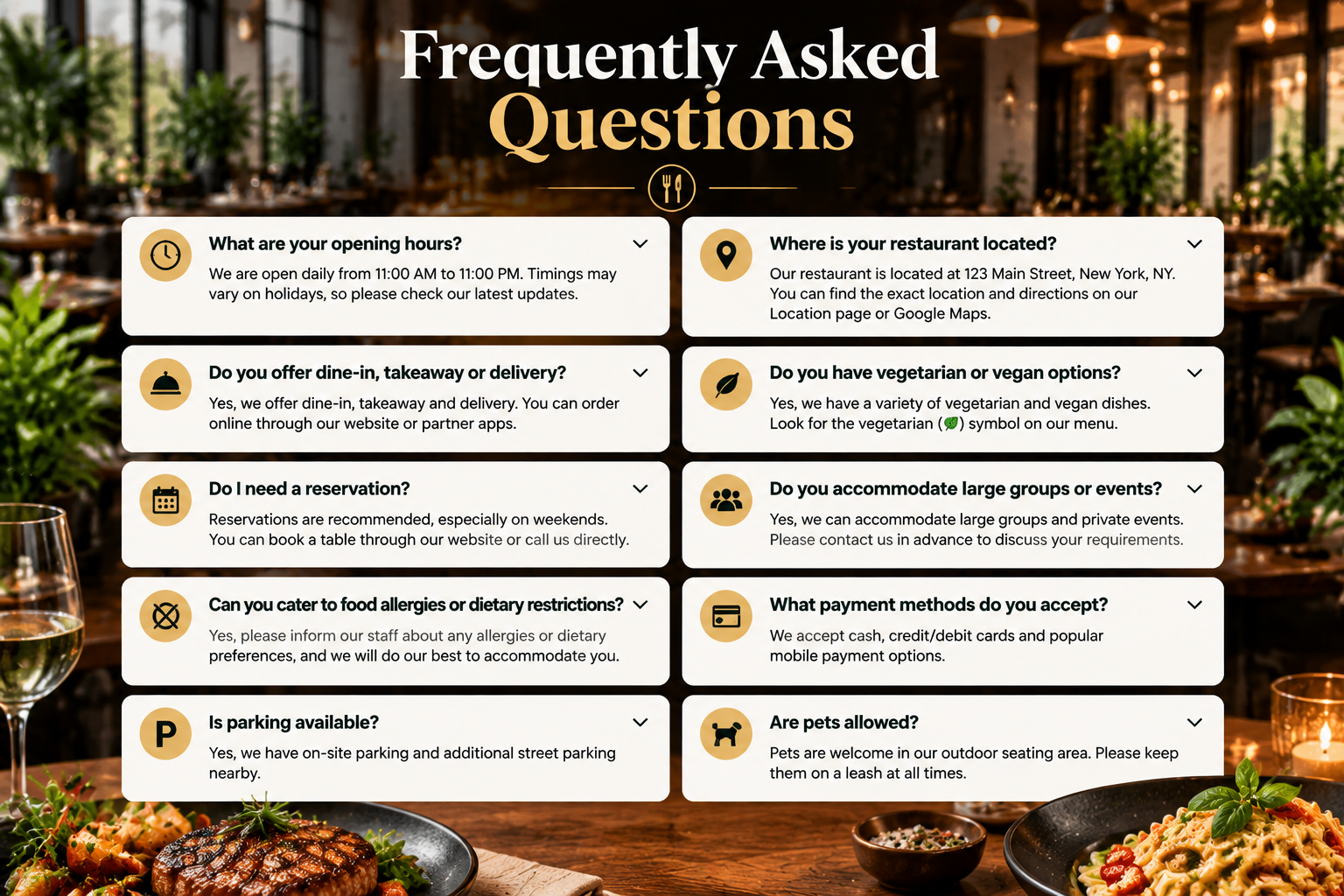
How much does it cost to open a restaurant in the USA?
The cost of opening a restaurant varies depending on the concept, location, size, and service style.
A small restaurant, food truck, or delivery kitchen may require significantly less investment than a full-service restaurant with a large dining area.
Important cost factors include:
- Location expenses
- Renovation
- Equipment
- Licenses
- Inventory
- Staffing
- Marketing
Before opening, create a detailed restaurant startup cost plan to understand your financial requirements.
Can I open a restaurant in the USA without experience?
Yes, it is possible, but preparation is essential.
First-time owners should learn about:
- Restaurant operations
- Food safety
- Financial management
- Hiring
- Customer service
Many beginners also work with experienced managers, chefs, or consultants to reduce operational challenges.
What licenses are required to open a restaurant?
Restaurant licensing requirements vary by state and local government.
Common requirements may include:
- Business license
- Food service permit
- Health department approval
- Food safety certifications
- Employer registrations
Restaurant owners should check their local government requirements before opening.
How long does it take to open a restaurant?
The timeline depends on factors such as:
- Location selection
- Lease process
- Renovation work
- Licensing approvals
- Equipment installation
- Hiring
A simple concept may open faster than a large restaurant requiring major construction.
Is owning a restaurant profitable?
A restaurant can be profitable, but success depends on many factors.
Important factors include:
- Location
- Customer demand
- Pricing strategy
- Cost management
- Operational efficiency
- Marketing
Profitability requires continuous management rather than only a good menu.
What is the most important factor in restaurant success?
There is no single factor that guarantees success. Successful restaurants usually combine:
- Strong concept
- Quality food
- Good location
- Efficient operations
- Excellent customer service
Consistency is one of the most important elements because customers expect the same quality every time.
Can foreigners start a restaurant business in the USA?
Foreign entrepreneurs may be able to start businesses in the USA, but they must understand:
- Business registration requirements
- Immigration rules
- Tax obligations
- Local regulations
Professional legal and business advice may be useful depending on individual circumstances.
Should I buy a franchise or start an independent restaurant?
Both options have advantages.
A franchise provides:
- Established brand recognition
- Existing systems
- Training support
An independent restaurant provides:
- More creative freedom
- Full control over branding
- Flexible decision-making
The right choice depends on your budget, experience, and business goals.
Final Conclusion: Turning Your Restaurant Idea Into Reality
Starting a restaurant in the USA is a challenging but rewarding journey. Success does not come only from having a great recipe or attractive interior. It comes from combining a strong concept with careful planning, financial control, operational systems, and customer-focused decisions.
A successful restaurant journey begins with:
- Understanding your market
- Creating a clear restaurant concept
- Developing a realistic business plan
- Managing startup costs
- Following legal requirements
- Choosing the right location
- Building a strong team
- Creating a memorable customer experience
The restaurant industry is competitive, but businesses that understand their customers and consistently deliver value can build strong brands.
Whether you want to open a small café, food truck, fast-casual restaurant, or full-service dining establishment, proper preparation is the foundation of success.
Your restaurant should not only aim to serve food. It should aim to create an experience that customers remember and choose again.